


SEEFOR 17(1): 26010
Article ID: 26010
DOI: https://doi.org/10.15177/seefor.26-010
REVIEW PAPER
Forest Restoration in Croatia – Historical Overview
Martina Đodan1, Sergio de-Miguel2, Maitane Erdozain3, Sanja Perić4, Lucija Žgela1*
Addresses:
(1) Croatian Forest Research Institute, Department of Silviculture, Cvjetno naselje 41, HR-10450, Jastrebarsko, Croatia;
(2) University of Lleida, Department of Crop and Forest Science, Plaça de Víctor Siurana 1, ES-25003 Lleida, Spain;
(3) Forest Science and Technology Centre of Catalonia, CTFC. Sant Llorenç de Morunys km 2, ES-25280 Solsona, Spain;
(4) Croatian Forest Research Institute, Common Affairs Service, Cvjetno naselje 41, HR-10450 Jastrebarsko, Croatia
Citation: Đodan M, de-Miguel S, Erdozain M, Perić S, Žgela L, 2026. Forest Restoration in Croatia – Historical Overview. South-east Eur for 17(1): 26016. https://doi.org/10.15177/seefor.26-010 .
Received: 26 Jan 2026; Revised: 11 May 2026; Accepted: 27 Apr 2026; Published online: 26 Jun 2026
Cited by: Google Scholar
Abstract
In the era of climate change, increasing ecological disturbances, and declining biodiversity, forest ecosystems face growing challenges that require effective restoration approaches grounded in ecological principles, sustainability, and adaptive management. Forest restoration plays an important role in developing resilient, stable, healthy, and diverse forests capable of sustaining ecosystem services. As these challenges intensify, restoration efforts become more important for ensuring the long-term sustainability of forests. Understanding the history of restoration is therefore crucial for making informed choices and guiding both current and future decisions. This overview examines the development of forest restoration in Croatia through three significant historical periods: before 1940, from 1940 to 1990, and from 1990 to the present. Each period reflects the increasing significance and growing understanding of restoration, shaped by environmental needs, policy, knowledge, social awareness, and technological capabilities. Early efforts were based on demanding afforestation and reforestation practices, driven by economic and political events, environmental disasters, and conservation needs. In the mid-20th century, efforts were influenced by post-war forest degradation and industrial forestry. Since 1990, restoration has increasingly incorporated ecological principles, international frameworks, and adaptive strategies, supported by advances in science, rising public awareness, and improved technology and mechanisation. The growing role of forest restoration over time reflects a broader recognition of its complexity and importance in addressing both past degradation and future environmental uncertainties.
Keywords: afforestation; reforestation; silviculture; historical periods; contemporary restoration principles; lessons learned
INTRODUCTION
Forest ecosystems are increasingly threatened by climate change, biodiversity loss, invasive species, and ecological disturbances. These challenges call for restoration approaches based on ecological integrity and adaptive management. Forest restoration plays a key role in creating resilient, stable, and diverse ecosystems that can withstand environmental pressures (Menéndez-Miguélez et al. 2025). The European Nature Restoration Regulation (NRR) and the requirement for National Restoration Plans establish an important legal setting for restoration. With over 80% of habitats in poor condition in Europe, the NRR sets binding targets for forests, supports the EU’s pledge to plant 3 billion trees by 2030, and promotes reconnecting rivers, restoring floodplains, and expanding urban green space. These measures aim to enhance biodiversity, secure essential forest services, mitigate climate change, and strengthen resilience to environmental risks. To plan and examine effectively under this framework, and other national restoration efforts, it is necessary to understand the historical trajectory of restoration—what has succeeded and what has failed—so that past lessons can inform present strategies and guide future initiatives.
Although often associated with recent environmental concerns, forest restoration has deep historical roots. The earliest known forest restoration practices date back to China during the Chou dynasty (1122–256 BCE). Restoration at that time focused on natural ecosystem management, resource use, forest protection, and reforestation (Lee, 1949, Erdozain et al. 2024). Ancient Chinese manuscripts described regulated timber harvesting, tree planting to preserve soil and water, and the importance of living in harmony with nature (Needham 1986). This is considered the first documented example of organised tree planting for restoration purposes. In Europe, early reforestation, as part of restoration, appeared during the medieval period. In the 13th century, large-scale tree planting was carried out near Nürnberg, Germany, on severely degraded land (Erdozain et al. 2024). The concept of sustainable forestry—Nachhaltigkeit—was first introduced in Germany in 1713. It promoted a balance between forest use and restoration (Agnoletti and Anderson 2000, Matić et al. 2015), a principle also adopted in Croatia and still applied today.
Croatia offers a uniquely valuable case for studying forest restoration history because it combines a long tradition of scientific forestry with a highly diverse forest landscape shaped by major political, economic, and social transitions. Croatia’s forests have undergone cycles of degradation and recovery under different governance regimes from the Austro-Hungarian Empire to Yugoslavia and the modern EU. Restoration efforts in Croatia date back to 1514, when the Tripartitum—a legal code written in the Kingdom of Hungary, which at the time included the regions of Croatia and Slavonia— introduced regulations to limit tree felling and livestock grazing, aiming to protect and preserve forest ecosystems (Vac 1900). This reflects some of the earliest legal foundations for sustainable forest use in the Croatian historical context. This long and rich history makes Croatia an exceptional natural laboratory for understanding how historical legacies shape contemporary restoration challenges and opportunities.
Therefore, the goal of this article is to examine the historical development of forest restoration in Croatia and the conditions that have shaped it over time. It also considers current challenges and the growing need to expand restoration in response to climate change. An emerging restoration strategy known as prestoration emphasises selecting species based on their projected ecological suitability under future climate and hydrological conditions. Prestoration involves using species that are expected to persist both now and in the future (Butterfield et al. 2017).
This paper reviews forest restoration activities and examines their evolving role in Croatia over time by analysing available studies and data. Sources include academic databases such as Web of Science, Scopus, Google Scholar, and Hrčak, as well as historical manuscripts and documents from Croatian forestry institutions. Forest restoration in Croatia for the purposes of this research is understood in a broad sense, encompassing afforestation, reforestation, meliorative interventions, and ecological restoration. It also includes economic, political, and social dimensions such as timber production, erosion control, and rural development.
Croatian forests are diverse, ranging from the Adriatic Sea along the coast, through mountainous regions, to floodplain and riparian areas in the east. To illustrate the geographical context relevant to forest restoration, Figure 1 presents a map of Croatia highlighting major regions, settlements, rivers, and the historical area of the Vojna Krajina.
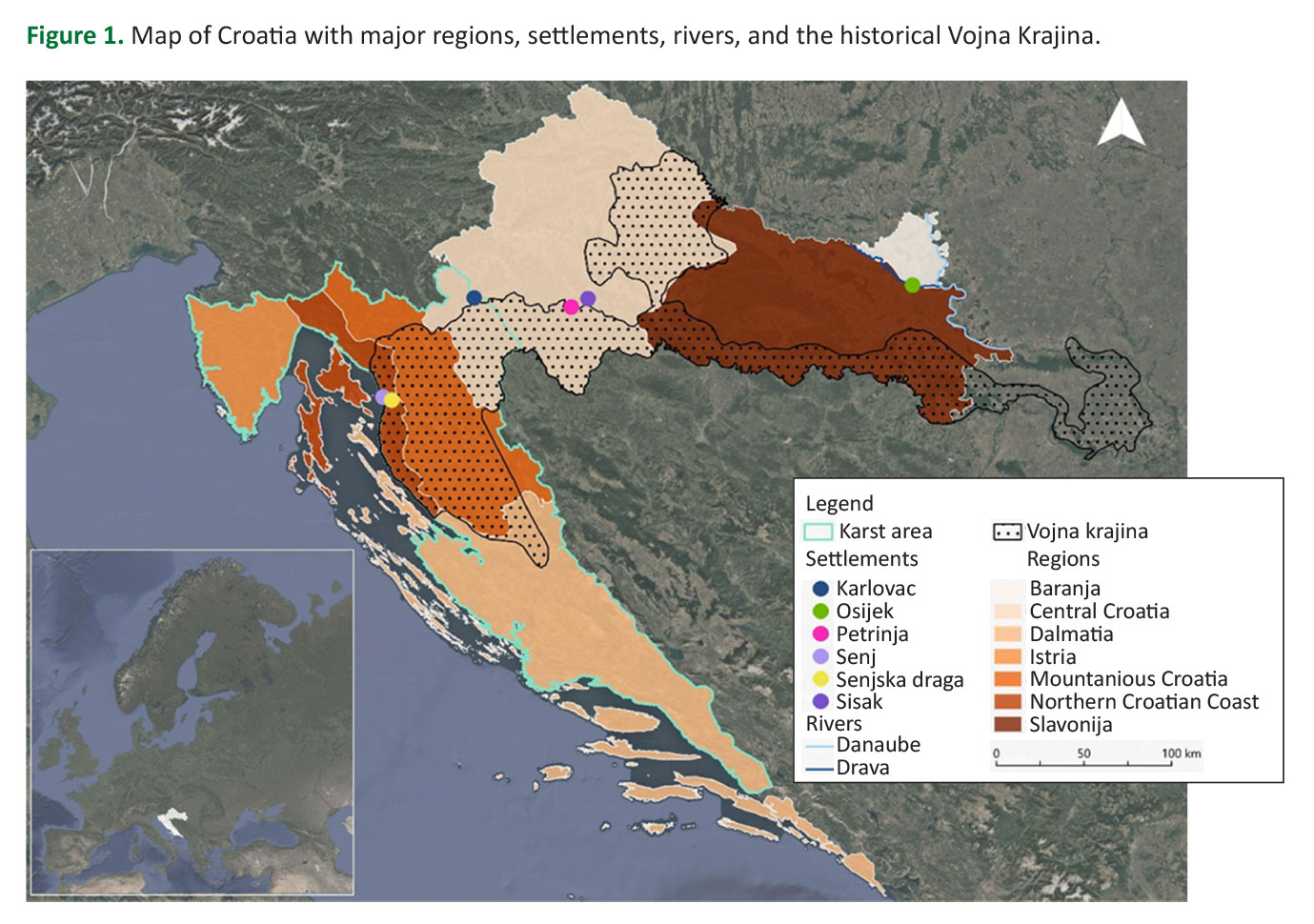 Figure 1. Map of Croatia with major regions, settlements, rivers, and the historical Vojna Krajina.
The literature review covers the earliest available materials up to the present, using keywords such as “forest restoration in Croatia,” “silviculture development in Croatia,” “karst reforestation,” “floodplain forest degradation,” and “Croatian Forest Act.” The results are organised into three historical periods—before 1940, from 1940 to 1990, and after 1990—chosen to reflect major socio‑political changes, shifts in forestry policy, and evolving environmental challenges and disturbances that influenced restoration practices.
Changes in Restoration Perspectives and Efforts Throughout the Key Historical Periods
Forest restoration efforts in Croatia throughout history have been driven by different political regimes, wood exploitation, wars, mine contamination, population expansion, and other ecological and social challenges. From medieval forest regulations to today’s more sustainable management, the Croatian approach reflects a mix of tradition, law, and scientific progress. This development can be divided into three main periods, each marked by the need for forest restoration and changes in restoration activities. Figure 2 presents a timeline highlighting key milestones and challenges in Croatia’s forest restoration efforts.
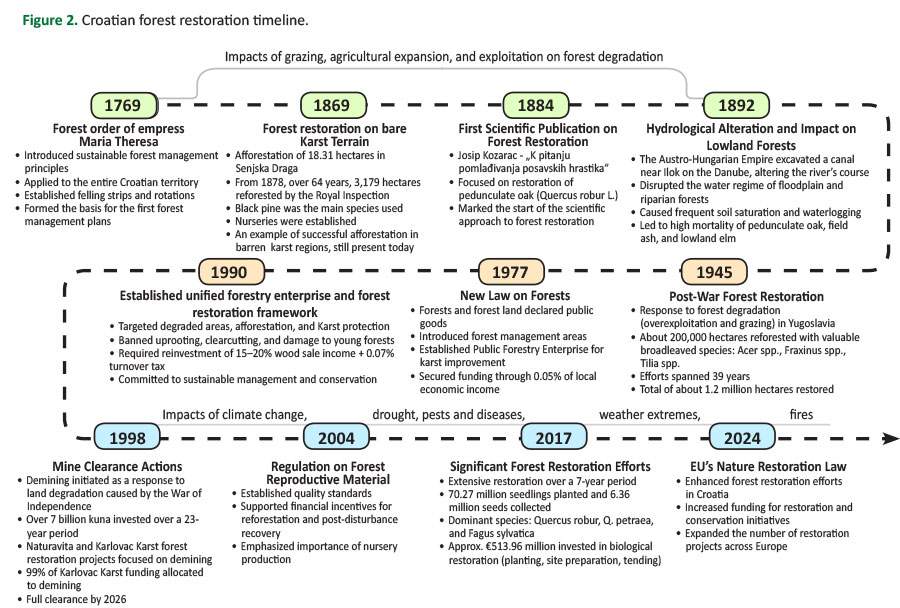 Figure 2. Croatian forest restoration timeline.
Forest Restoration in Croatia Before 1940
The appearance of municipal statutes in Croatian towns during the 12th century marked the beginning of structured forest protection, introducing early regulations aimed at preserving forest areas and limiting excessive logging. Despite these initial steps, widespread deforestation before and during the First Industrial Revolution—combined with a lack of restoration—led to significant ecological and economic impacts. These effects were especially evident in lowland regions and floodplains, where industrial activity was most concentrated (Matić et al. 2015). In response to growing awareness of the long-term risks of unsustainable forest use and the need for balanced management, forestry began to develop, grounded in the principle of sustainability. In Croatia, forestry started to take shape as an established profession in the 18th century. The earliest formal regulation dates to 1755, when the Forest Order for Vojna Krajina introduced guidelines for managing and protecting forests in Slavonia, including instructions for foresters (Anić 2025). In 1765, the Habsburg military administration introduced forest-management guidelines for the Ogulin region and the Velebit area, formalised in the Instruction for the Karlovac Generalate (Pernar 2016). During this period, the military conducted extensive surveys that resulted in the mapping of the vegetation of eastern Croatia and Slavonia (Altić 2022).
A major milestone was reached in 1769 with the adoption of the first comprehensive forest law under the Forest Order of Empress Maria Theresa (Klepac 1965, Meštrović 1995). This legislation introduced the principle of sustainable forest management and, for the first time, applied to the entire territory of Croatia. It also outlined procedures for dividing forests into annual felling strips and establishing rotations, which later formed the basis of the first forest management plans (Meštrović 1995, Benko and Čavlović 1998). The first modern Forest Act was enacted by Emperor Franz Joseph I on December 3, 1852, applying to the entire Austro-Hungarian Monarchy. By special imperial decree, it came into force in Croatia and Slavonia on January 1st, 1858, and in Vojna Krajina on February 7th, 1860. The law introduced a formal classification of forests into state-owned, municipal, and private categories. It emphasised sustainability, which was explicitly stated in Article 9, requiring that forests be maintained and improved through responsible management (Matić et al. 2015).
Scientific interest in forest restoration began with the work of forest engineer Josip Kozarac, who published an article in 1884 in a Croatian forestry journal on the restoration of Quercus robur L., one of the most important tree species in Croatia. The first legally grounded forest management plan for the Sisak and Petrinja area, which included the restoration of Q. robur forests, dates to 1853. These forests have been under continuous management for more than 170 years (Matić 1994). In 1894, a significant law was passed, establishing a formal system of forest governance and oversight by public authorities (Anić 2025). It regulated the appointment of professional forestry staff and the implementation of forest management practices in areas of special public interest, marking the beginning of organised restoration efforts in Croatian forestry. From then until the mid‑20th century, Croatia began to see the first tangible results of restoration. Although data from this period are limited, records show that activities took place in various regions across the country, nearly all on public land and funded by the government (Čavlović 1994). Apart from royal and church‑owned forests, most landscapes remained unmanaged and heavily exploited, leading to severe degradation, particularly in karst regions.
First Forest Restoration Activities in Croatia’s Karst Regions
Throughout this period, forests in Croatia’s karst regions have suffered from overexploitation and degradation. Excessive logging, which left forests degraded and exposed karst terrain, combined with uncontrolled grazing and limited public awareness, led to soil erosion, water loss, reduced agricultural productivity, and severe flooding (Matić et al. 2011). Historical manuscripts indicate that the first restoration efforts were mostly concentrated in Dalmatia, Istria, and other karst landscapes. Until the late 18th century, Dalmatia and Istria were under Venetian rule, with forest management beginning in the 13th century in Istria and the 15th century in Dalmatia. The Venetians established the first systematic forest surveys in Europe and the first forest cadastre (Morosini 1980), which included these regions. However, limited information is available on forest restoration from that time.
In the late 18th century, these areas briefly came under Austrian rule, during which public care for forests continued to decline. This led to increased deforestation and frequent flooding. In the early 19th century, French authority was established, and during the autonomous French administration in 1809, Croatia introduced forestry laws to address the gradual forest degradation. That same year, the Mediterranean region became part of the Illyrian Provinces. In Dalmatia, the main goal was to prevent goat grazing by building fences. About 30,826 families were required to maintain these forest areas. In total, 372 forest stands were established in Dalmatia, covering approximately 19,000 hectares (Piškorić 1976). These efforts also created jobs, giving the initiative economic value. The earliest professional afforestation plans for barren karst areas in Istria were developed by J. Ressel in 1842, marking the start of organised forest restoration in the region (Lipej 2005). Degradation continued until 1886, when a law mandated afforestation of bare karst areas.
Afforestation efforts began in Ogulin in 1865, in Gospić in 1867, in Otočac in 1868, and in Senj in 1869 (Severinski 1965, Ivančević et al. 1986). These early efforts focused on regeneration cuttings and reforestation of small clearings but had limited overall success. In 1869, afforestation began in Senjska Draga, restoring about 18.31 hectares. The project was paused until 1878, when the Royal Inspection for the Afforestation of Karst in the Croatian Military Border—also known as the Inspectorate for the Afforestation of Karst, Bare Rocky Grounds, and Flood Control—was established. This institution initiated a more systematic and large-scale restoration of degraded karst areas. The Inspection's activities covered 40,000 hectares of scrubland and barren terrain (Severinski 1965). The main goals were to reduce erosion, regulate wind and water impact, and protect infrastructure in torrent-prone areas. Pinus nigra JF Arnold was the dominant species used, and many of the region’s largest forest cultures were established during this time. Regeneration cuts also improved stand vitality and structure, while grazing was prohibited on 2,000 hectares of degraded land (Ivančević and Piškorić 1986). From 1878 to 1942, the Royal Inspection managed 51,777 hectares. Within this, 95 crop areas and forest preserves were created on 10,097 hectares. During that time, 1,738 hectares were reforested, 1,441 hectares were additionally planted, and 7,435 hectares were regenerated naturally. To support these efforts, nurseries produced 82,724,368 seedlings and 3,612 kg of seeds for restoration (Severinski 1965, Ivančević 1999). Planting used a standard method involving 40 × 40 × 40 cm pits for bare-root seedlings. Both coniferous and broadleaf species were also sown. The quantity of seedlings and seeds used in these restoration efforts is presented in Table 1.

During its 64 years of operation, the Karst Afforestation Inspectorate functioned under four different empires. Over this period, the Inspectorate spent a total of 372,088 forints, 1,043,774 crowns, 15,534,211 dinars, and 404,996 kuna (Piškorić and Vukelić 1992). More than half of the expenditures covered personnel costs, one-third funded biological restoration activities, and the remaining amount was allocated to technical measures (Figure 3).
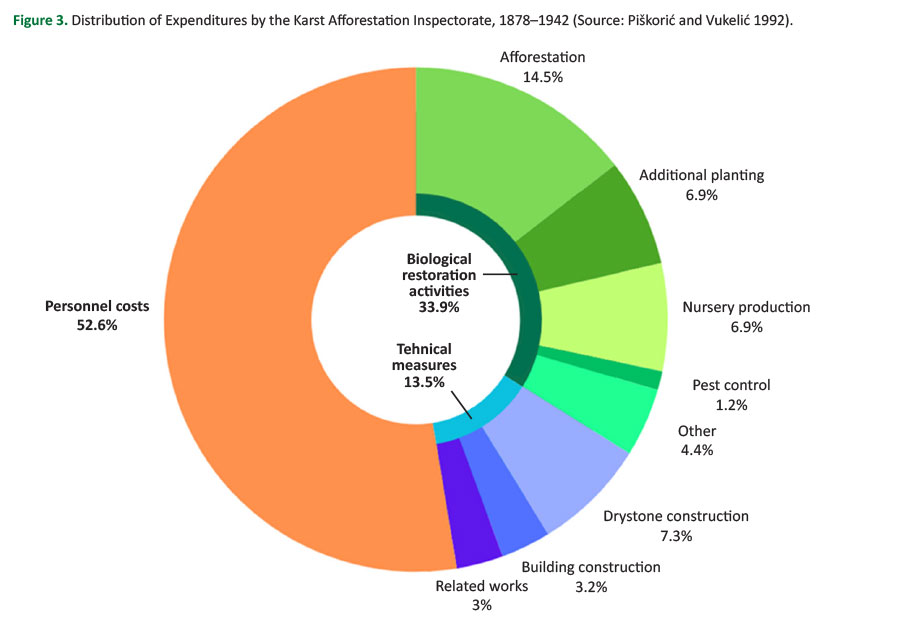
Due to intense torrent activity in karst areas, particularly around the city of Senj, a concrete barrier was built in 1892, along with 165 additional concrete structures. More than 21,358 m² of material were excavated, and over 8,457 m³ were used for torrent regulation in karst regions of Croatia (Ivančević 1999). These efforts successfully brought the torrents under control. Notably, Senj has not experienced severe flooding since 1856, demonstrating the effectiveness—as well as the complexity and cost—of these restoration measures. Between 1886 and 1913, 4,000 hectares were afforested, although the efforts were interrupted by World War I. Between the two world wars, another 2,000 hectares were afforested (Piškorić and Vukelić 1992).
First Restoration Efforts and Challenges in Quercus robur L. Forests of Slavonia
At the beginning of the 18th century, Q. robur forests were widespread across lowland and floodplain areas, with forest cover in Slavonia reaching 70% (Rauš 1973, Anić 2025). These stands resembled untouched primaeval forests (Anić 1971), and regeneration occurred naturally from seed. Natural regeneration was mostly achieved through individual tree cutting, while direct acorn sowing under the hoe was rarely used (Kozarac 1897). After 1699, when Slavonia came under Habsburg rule, the structure and natural regeneration ability of these forests began to decline. This was due to overexploitation, population growth, increased grazing, acorn shortages, and browsing of young saplings. As a result, restoration efforts focused on areas near villages, with acorn sowing under the hoe for Q. robur artificial regeneration (Kozarac 1886).
During the 18th and 19th centuries, Q. robur forests in eastern Croatia continued to degrade, partly due to hydrotechnical interventions. These altered the course of the Danube River, drying out and destabilising forest ecosystems (Pilaš and Planinšek 2011). In 1892, the Austro-Hungarian Empire excavated a canal near Ilok, close to Šarengrad, to improve navigation. This significantly changed the river's course and disrupted the water regime of nearby forests (Mayer 1994, Mayer and Hećimović 2008). Similar interventions occurred along the Sava River, where numerous dredging operations were undertaken throughout the 18th century to facilitate navigation, including documented works on the Sava and Kupa in 1759. The rapid escalation in the economic and commercial significance of the Sava during this period is closely linked to the liberation of large portions of the Sava–Drava interfluve from Ottoman rule. Following these conflicts, the entire Sava–Drava interfluve came under Habsburg administration, which stimulated the river’s commercial use and further impacted its hydrology (Šimunjak 2022). By the 19th century, changes in the hydrological regime had severely affected the stability and ecosystem services of lowland forests dominated by Q. robur (Pilaš and Planinšek 2011). Frequent waterlogging led to tree dieback. High tree mortality rates were recorded in Q. robur and Fraxinus angustifolia Vahl, while Ulmus minor Mill. disappeared from the stand composition (Matić 1994). These extreme site conditions reduced the growing stock, although Q. robur remained the most economically important hardwood species in Croatia. Poor forest management—such as poorly planned infrastructure and heavy machinery use—worsened weed growth and increased soil water retention, further hindering natural restoration.
To address this, artificial regeneration of Q. robur stands was implemented, along with habitat restoration measures such as drainage system construction to regulate soil water levels (Posarić 2008). The goal was to initiate regeneration before weeds established, and further hydrological stress occurred. Restoration included direct sowing of acorns and planting of seedlings, based on regeneration methods. This involved seed and final cut, use of forest reproductive material, monitoring, and tending. Clear-cutting was considered unsuitable for restoring Q. robur stands (Starčević 1990). Under optimal conditions, regeneration cuts could restore stands within 10–12 years (Matić 1994). These efforts reflected a strong commitment to sustainable forest management. This principle was formally adopted in the Kingdom of Yugoslavia with the Forest Act of December 21st, 1929 (Matić et al. 2015). The law required sustainable practices in both state-owned and private forests (Meštrović 1978).
Forest Restoration in Croatia from 1940 to 1990
During this period, up to the 1990s, Croatia was part of Yugoslavia, and most available data on forest restoration and management refer to the entire Yugoslavian territory. Forests were transferred to state ownership when Yugoslavia took control of previously privately-owned land, resulting in 76% of forests becoming state-owned and 24% remaining private. Forestry efforts focused on afforestation, reforestation, and implementing sustainable forest management. By the mid-20th century, sustained forest management aimed to preserve and enhance biodiversity, productivity, vitality, ecosystem protection, and the social role of forests (Klepac 1998, Matić et al. 2015).
Between 1945 and 1990, the Forest Law was amended six times, with an emphasis on conservation, preventing degradation, and promoting afforestation. Despite these efforts, forests experienced intensive logging after both world wars, increasing the need for restoration. In 1948, timber harvesting in Croatia reached 7.24 million m³, exceeding the estimated increment of 5.5–6.0 million m³ by roughly 20–30%. It wasn’t until the late 1950s that harvested volume fell below the estimated increment—a trend that has continued (Krpan 1992, Piškorić and Vukelić 1992).
To address overexploitation, about one million hectares were afforested across Yugoslavia after World War II, of which around 200,000 hectares were planted with valuable species such as Acer spp., Fraxinus spp., and Tilia spp. to enhance timber quality and ecological resilience. The remaining 800,000 hectares were predominantly afforested with conifers (Pinus nigra, Pinus sylvestris L., Picea abies (L.) Karst.) on karst and degraded soils, Robinia pseudoacacia L. on poor sites, and Populus spp. and Salix spp along rivers. Between 1945 and 1956, site preparation led to the restoration of 220,000 hectares. From 1957 to 1965, 177,300 hectares were reforested, along with 369,400 hectares of meliorative interventions. Reforestation continued with 91,140 hectares (1966–1970), 77,170 hectares (1971–1975), 168,075 hectares (1976–1980), and 181,523 hectares (1981–1984) (Stilinović 1986).
From the 1960s, the use of mechanisation significantly improved restoration efficiency. Chainsaws increased labour productivity by 75%, improved cost-effectiveness by 16%, and doubled overall economic efficiency. Forwarders were introduced for more efficient timber extraction (Sever and Slabak 1988). Most restoration efforts targeted karst forests and were financed through taxes and grazing bans. Support also came from the United Nations, beginning in 1954—the same year the Institute for Practical Forestry Research was founded in Zagreb. This later evolved into the Croatian Forest Research Institute (since 2009), after merging with the Institute for Forest Seed Control in Rijeka (1959) and the Institute for Conifers (1961). These developments led to the establishment of the Forest Research Institute in Jastrebarsko in 1974 (Gračan 2015).
In 1947, the Law on Declaring Forests Public Property and the formation of forest offices consolidated forest management in Croatia. The 1977 Forest Law declared forests and forest land as public goods, introduced the concept of the forest management area, and established a Public Forestry Enterprise for karst forest improvement, funded by a 0.05% levy on the gross income of local economic entities.
Restoration Activities in Karst Regions of Croatia from 1940 to 1990
The karst regions of Croatia have undergone significant environmental degradation, including deforestation, soil erosion, and forest land loss. During this period, these forests were heavily exploited, often without any management, and their condition further deteriorated due to frequent fires, making restoration increasingly urgent (Biškup and Vondra 1996). Many of these forests had important protective roles, such as preventing erosion, landslides, and floods.
Restoration efforts focused on planting various tree species, along with technical measures to control torrents and floods. In karst areas, species such as R. pseudoacacia, P. nigra, P. sylvestris, and Pinus halepensis Mill. were commonly used (Stilinović 1986). Between 1945 and 1975, around 25,000 hectares were afforested in these regions (Matić et al. 2011). Despite an average afforestation success rate of 67%, these efforts are considered notable given the extreme conditions and the extent of land degradation. The restoration of forests in Senjska Draga is a prominent example of successful afforestation in barren karst areas. The planting of P. nigra proved especially effective in stabilising soil and controlling torrents and floods (Severinski 1965). Both biological and technical restoration measures have been crucial for soil protection, native species vitality, improved water retention, and the emergence of new springs. Today, P. nigra forest cultures are seen as one of the most successful forest restoration efforts in the Mediterranean, offering economic, ecological, protective, recreational, and health benefits (Severinski 1965). After 1948, afforestation intensified, but as P. nigra began to spread naturally through self-seeding, active planting gradually declined, and the landscape transitioned toward native deciduous shrubs and tree forest species (Lipej 2005).
After 1956, afforestation and melioration in karst areas gradually declined due to the introduction of a self-financing system, which shifted funds to other sectors such as tourism and industry (Matić et al. 2011).
Restoration Actions in Quercus robur L. Forests from 1940 to 1990
Q. robur forests have historically been restored naturally through self-seeding and regeneration cuts, which were applied in two stages—seed cut and final cut—to promote seed dispersal and seedling growth. However, the lack of suitable shrub species to provide vertical stand structure, which is essential for shading and creating optimal conditions, often resulted in weed overgrowth, preventing the successful establishment of oak seedlings. This, combined with poor seed production, agricultural expansion, and habitat degradation from hydrological changes, caused a significant decline in oak forests by the mid-20th century. As a result, artificial regeneration using planting and seeding became increasingly necessary (Starčević 1990, Matić 1994).
The natural restoration of Q. robur was further hindered by the aggressive spread of Carpinus betulus L., which easily overgrew oak seedlings, highlighting the need for timely tending activities. Successful natural restoration requires approximately 800 kg/ha-1 of acorns (Anić 2025). During this period, artificial regeneration in oak forests was mainly carried out through regeneration cuts, followed by planting nursery-grown seedlings or manual/broadcast seeding. Since the 1970s, tree dieback has increased, largely due to drought and changes in water regimes, with Q. robur especially affected. Research from the late 20th century proposed that, in severely degraded stands, Q. robur should be partially or fully replaced with pioneer species such as Fraxinus angustifolia, Alnus glutinosa L., Salix alba, and Populus spp., in line with the natural course of forest succession (Oršanić et al. 1996, Anić 2025). Although clear-cutting was previously used, it has not been part of restoration practices for decades. For the amelioration of degraded Q. robur and Fagus sylvatica L. stands, species like P. abies, Abies alba, and other broadleaf species were used.
Between 1969 and 1989, 392 wagonloads of acorns were collected from the Vinkovci forests, averaging 18.5 wagonloads per year. Major obstacle during this period was vole overpopulation, which peaked from 1987 to 1989 and caused severe damage to restored areas. Despite protection measures, some sites were almost destroyed (Rubić 1997). In restoration projects by the Vinkovci Forest Administration, site preparation involved removing shrub-layer vegetation. After seed cutting, sunlight was allowed to reach the forest floor, promoting seedling growth. Fungicide treatments were applied to protect young plants from powdery mildew. Mechanised removal of felled trees increased efficiency. From 1960 to 1970, transport infrastructure and forest roads were constructed, but they did not reach the lowland Q. robur forests, which remain crucial for effective restoration (Sever 1988). From 1987 onward, sustainability became a key principle of global environmental policy (Glavač 1999), which set the foundation for subsequent national frameworks.
Forest Restoration in Croatia After 1990
Since 1990, forest restoration in Croatia has been regulated by the Forest Act (NN 52/90), with a major revision in 2018 (NN 68/18) and amendments through 2023. These laws emphasise sustainable forest management and reforestation. The Regulation on Forest Management (NN 97/18, 101/18, 31/20, 99/21, 38/24) defines procedures for updating forest management plans and applying silvicultural measures, especially in degraded or mine-suspected areas. Additional regulations—such as the Regulation on Forest Reproductive Material (2004, amended in 2010 and 2013) and rural development measures (from 2015)—support the use of high-quality seedlings and offer financial incentives for reforestation and post-disturbance recovery.
The 1990 amendments to the Forest Act created a unified state forestry enterprise and introduced a legal framework for restoring degraded forests, expanding afforestation, and strengthening protection, particularly in the Karst region. The Act prohibits clear-cutting and any activity that damages forests or individual trees. In the 1990s, forest owners and companies were legally required to reinvest 15–20% of wood sales income and pay a 0.07% turnover tax to fund reforestation, afforestation, Karst restoration, and forestry research (National Forest Accounting Plan 2018). However, this rate has declined over time due to policy, economic, and social shifts, and it has now almost lost its original purpose (Margaletić 2024). Croatia confirmed its commitment to sustainable forest management by signing several international agreements: the Strasbourg ministerial resolutions (1990), the Rio Declaration (1992), and four Helsinki ministerial resolutions (1993) (Martinić 1999, Matić et al. 2015). In 1921, a natural approach to silviculture was promoted, which is still relevant today. It emphasises that artificial regeneration should follow the principles of natural regeneration (Anić et al. 2020).
Since 1990, forest restoration in Croatia—especially in Q. robur stands—has mainly involved planting or sowing on small strip- or circle-shaped areas after regeneration cuts (Matić et al. 1994), with the aim of improving forest adaptation and resilience to climate change and disturbances (Anić 2025). Due to soil depletion and disease susceptibility of Populus × canadensis Moench clones (Majer 1994), forestry shifted toward converting poplar monocultures into natural stands of native Populus nigra L., Populus alba L., Salix alba L., F. angustifolia, and Q. robur. In eastern Slavonia and Baranja, afforestation on Danube river islands and floodplains involved planting one- or two-year-old F. angustifolia seedlings, spaced 2 × 2 meters apart, covering 102.68 hectares restored between 1999 and 2007 (Mayer and Hećimović 2008).
Biotic stressors, especially ash dieback caused by the invasive Hymenoscyphus fraxineus, have intensified restoration needs, severely affecting Fraxinus excelsior L. and F. angustifolia stands. Over 5,000 hectares in Croatia are critically affected, with restoration costs over €6.6 million (Vincenc 2019). Current silvicultural responses mostly include monitoring and sanitary and salvage cuts (Gross et al. 2014, Landolt et al. 2016). Large projects like the SUPERB initiative use integrated strategies, restoring about 80 hectares in the Croatian Serbian cross border area by removing non-native Populus × canadensis and planting native species such as Q. robur, Prunus spp., and Sorbus spp., supporting biodiversity and climate resilience goals (https://forest-restoration.eu/).
Under Measure M08 of the EU Rural Development Programme (2014–2020), established by Regulation (EU) No 1305/2013, funding is provided for investments in the development of forest areas and the improvement of forest sustainability. Eligible forest landowners and associations must submit approved management plans to receive non-refundable support for forest conversion based on standard costs per hectare. In 2023, the total allocation was €11,764,706.25, with projects covering 2,511 hectares and €15 million approved since the first calls. Restoration cost varies by species and terrain, ranging from about €11,000 to €22,000 per hectare, depending on the method and tree type.
Technological advances since the late 20th century have improved forest growth modelling and restoration planning, exemplified by SIMPLAG software designed to support Q. robur forest recovery (Teslak et al. 2012). Remote sensing technology, such as Landsat 8 and RapidEye, now offers better spatial resolution to detect forest damage and monitor restoration, with NDVI remaining the most common vegetation index. For example, after a severe 2013 windstorm damaged about 40,000 m³ of F. sylvatica on Medvednica Mountain, restoration involved skid trails and natural regeneration, successfully supported by the species' strong regenerative ability (Matić et al. 2003, Pilaš et al. 2019, Anić et al. 2020).
The growing momentum behind forest restoration initiatives in Croatia and across Europe reflects a response to decades of ecological degradation, much of which stems from anthropogenic pressures (Menéndez-Miguélez et al. 2024). Agricultural expansion, particularly in lowland regions, has historically lacked ecological sensitivity, contributing to habitat fragmentation, soil exhaustion, and the suppression of natural regeneration processes. In Eastern Slavonia, hydrological interventions — including canalisation, drainage, and floodplain regulation — have significantly altered water regimes, accelerating the decline of Q. robur forests and reducing their resilience to climate extremes (Matić et al. 1994, Pilaš and Planinšek 2011).
Demining Activities
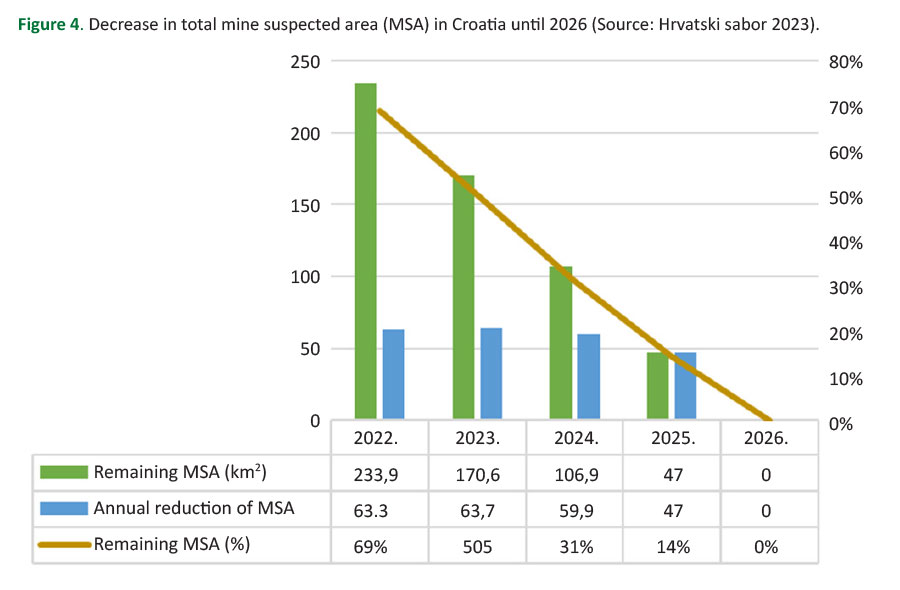
From 1991 to 1995, the Croatian War of Independence caused widespread damage to forests, many of which were left unmanaged. Large areas were also contaminated with landmines. In 1991, forest governance shifted from Yugoslavia to Croatia, and state forests came under the management of Croatian Forests Ltd., which has since restored and maintained around 50,000 hectares of forest annually (Martinić 1999). However, starting in 1995, Croatia’s forest area began to decline due to legal provisions allowing infrastructure development—such as roads, pipelines, and power lines—without compensation or reforestation obligations. For example, 566 hectares of state forest were lost during the construction of the A1 motorway (Matić et al. 2015). Since 1991, major efforts have been made to clear mines from forested areas. Between 1998 and 2021, continuous demining and survey operations reduced mine-suspected areas (MSA) by 1,631 km². Over 7 billion kuna—approximately 930 million euros—were invested in these efforts. Funding came from the national budget, public enterprises, donations, the World Bank, and EU funds, with 15% national co-financing. A detailed summary of funding sources and their contributions is provided in Table 2.
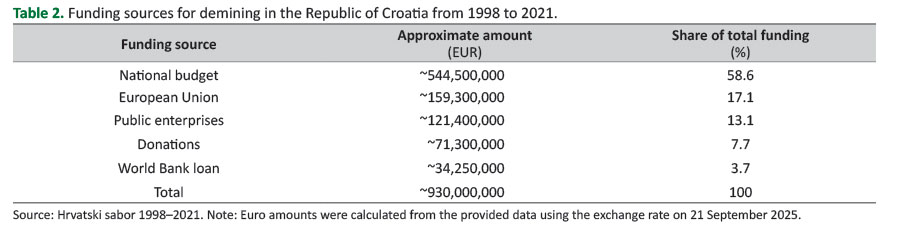 Table 2.Funding sources for demining in the Republic of Croatia from 1998 to 2021.
Between 2015 and 2023, the Naturavita project, and between 2019 and 2023, the Karlovac Karst project, made significant contributions to forest ecosystem restoration in Croatia, especially by reforesting stands of non-native tree species. A key component of both projects was demining mine-suspected areas. The Naturavita project received €49,971,620 in funding, 85% of which was co-financed by the EU Cohesion Fund. It focused on demining and restoring forests and forestland in protected areas and Natura 2000 sites within the Danube-Drava region (Herceg et al. 2019). The Karlovac Karst project was funded with 189.5 million Croatian kuna, of which 188.3 million kuna was allocated for demining activities. Thanks to these sustained efforts and significant investments, Croatia is on track to clear all mine-contaminated areas by 2026 (Figure 4).
Contemporary Post-disturbance Restoration
Disturbances in forests in Croatia are numerous, and almost no economically important tree species are completely resilient to them. Therefore, only a few prominent examples are mentioned, which have strongly affected forestry in the country and emphasise the need for active restoration.
Over the past thirty years, forest fires in Croatia have become more frequent due to climate change (Vučetić 2014), human negligence, and growing tourism. In 2017 alone, Dalmatia had 220 wildfires that burned 34,508.73 hectares of forest, causing damages worth 779.5 million kuna, according to Croatian Forests Ltd. (Anić 2019). The Mediterranean region—especially Dalmatia and Istria—is the most vulnerable because of its hot, dry climate. Between 1992 and 2007, over 4,851 forest fires burned 251,901 hectares (Jurjević et al. 2009). From 2007 to 2015, 2,137 fires affected 75,572 hectares (National Forest Management Plan 2016–2025). The Croatian Fire Board reports that between 2016 and 2021, 19,966 fires burned 179,244 hectares. Data from 2016–2025 show that bushes and thickets make up 39% of the total burned area, while forest cultures represent only 2%. Fires in karst areas cause severe soil erosion, which makes restoration harder and more expensive. Restoration is regulated by the Forest Law and carried out by Croatian Forests Ltd., which replants about 300 hectares annually in Dalmatia, using over 500,000 seedlings. However, with around 1,500 hectares burning each year, reforestation efforts are not enough. Afforestation usually involves special machines that dig holes 40 cm deep in rows 3 meters apart. Seedlings are planted every 2 meters, resulting in about 2,000 plants per hectare. To reduce fire risk, Croatian Forests Ltd. has installed 98 surveillance cameras in 48 locations, supported by four regional operation centres. Public education campaigns are also part of their strategy. Several initiatives have helped with post-fire restoration in Croatia. The “Boranka” campaign, launched in 2017, mobilised over 8,500 volunteers who planted 100,000 trees on 50 hectares in Dalmatia. In 2018, the Feniks project restored 10.24 hectares near Split using native plants to focus on ecological recovery. Since 2019, the national campaign “Plant a tree. Don’t be a stump.” has given away free seedlings to citizens, leading to more than 150,000 trees being planted across the country.
F. angustifolia is one of the most common trees in Croatia’s lowland floodplain forests, covering about 72,690 hectares. It ranks second in area and volume after Q. robur (Čavlović 2010). This species has high ecological and economic value and is well-suited for climate change adaptation and restoration due to its drought and heat tolerance (Schmidt 2007; Fuchs et al. 2021, 2024). In eastern Slavonia, it acts as a pioneer species, forming forest edges near wetlands and providing important benefits (Vukelić and Rauš 1998, Prpić et al. 2005). Ash was traditionally used for restoring floodplain forests, but its use has declined due to seedling susceptibility to Hymenoscyphus fraxineus. Recent problems with disease and dieback in F. angustifolia have affected nursery production; since 2022, no seedlings have been produced. This fungal pathogen, introduced from Asia in the 1990s, causes dieback by damaging the entire tree, including roots (Gross et al. 2014, Kranjec Orlović et al. 2020). In 2019, about 5,000 hectares of ash stands urgently needed restoration, with costs over €6.6 million. Since no effective treatment exists, efforts focus on monitoring and removing infected trees. Between 2017 and 2022, Croatian Forests Ltd. spent around €13.1 million restoring areas affected by various disturbances (Annual Report 2017–2024).
In 2013, Corythucha arcuata was first found in the Spačva basin and has since spread rapidly through Q. robur stands. In early 2014, an ice storm damaged 56,021 hectares of forest in Gorski Kotar, leading to a mass outbreak of Ips typographus. This prompted authorities to classify it as a natural disaster in 2016. By 2017, windthrow affected about 500,000 m³ of timber in the area (Anić et al. 2020). Meanwhile, Thaumetopoea pityocampa, usually found on Pinus species in the Mediterranean, has expanded inland due to climate change. Its range now includes the Lika region of Croatia and the Neretva Valley in Bosnia and Herzegovina, with a notable population increase (Anić 2019, Zorić et al. 2024, Hartmann et al. 2025).
Since the 1990s, the impacts of climate change have steadily intensified, resulting in more frequent extreme weather events—including windstorms, heavy storms, and forest fires—as well as widespread forest degradation and fragmentation. These effects include tree dieback caused by drought, pests, and diseases, a rising occurrence of invasive species, erosion, and excessive homogeneity (Anić et al. 2020).
CONCLUSIONS AND LESSONS LEARNED
Forest restoration in Croatia has evolved over time in response to changing environmental, social, political, and economic conditions (Erdozain et al. 2024).
Prior to 1940, efforts focused on establishing legal frameworks and reversing deforestation from industrial expansion, agriculture, and grazing, with afforestation on karst terrains and natural regeneration in lowland Q. robur forests, while hydrotechnical disruptions in Slavonia destabilised oak stands. Between 1940 and 1990, large-scale reforestation responded to overexploitation and post-war degradation, supported by mechanisation, stricter legislation, and international support, with a continued focus on karst regions and a gradual shift toward artificial regeneration of Q. robur. Since the 1990s, restoration has focused on demining and addressing climate-related stressors, including droughts, storms, and invasive pests, which have caused severe diebacks, erosion, and flooding. F. angustifolia has suffered severe dieback due to H. fraxineus, which has led to a shift toward native mixed-species planting, increased tree diversity, monitoring, and research.
The analysis raises questions about the current state of forests, forest ecosystems, and the forestry sector today, and especially about the investments that will be required for future restoration, considering increasing risks and challenges. Societal perceptions, the legislative framework, and daily decision-making in practical forestry differ from historical understandings and efforts, but the question remains whether our current knowledge is sufficient to face what lies ahead for foresters and the forestry sector. The role and interplay of newly developed ideas, such as prestoration, nature-based solutions, circular bioeconomy, assisted migration, protection of genetic resources, and other contemporary topics recognised by the scientific and expert forestry community, are yet to be fully determined. Nevertheless, some points can clearly be drawn—for example, the conclusion that current forest cover, species composition, management types, and associated benefits, such as biodiversity and ecosystem services, are highly dependent on historical social and management contexts. Thus, understanding the principles of natural species spread under a changing climate cannot be considered without accounting for the complex historical and anthropogenic legacies, still visible today, through current social, economic, political, and environmental barriers.
Author Contributions
SP secured the research funding, MĐ and LŽ wrote the manuscript. EM and SdM assisted with editing and revising the manuscript.
Funding
This research has been supported by the H2020 SUPERB project (Grant Agreement No. 101036849, H2020‑EU.3.5.) and the Croatian Science Foundation under the project IP-2016-06-7686 “Establishment and development of LABoratory for ADAPTed forest reproductive material (LABADAPT)".
Acknowledgments
Special thanks are extended to Karmen Vugdelija (CFRI) for technical support in preparing the manuscript.
Conflicts of Interest
The authors declare no conflict of interest.
REFERENCES
Agnoletti M, Anderson S, 2000. Forest History: International Perspectives. CABI Publishing, Wallingford, UK.
Altić M, 2022. Defending Europe: Habsburg Military Cartography of the Croatian Borderland. Nuova Antol Mil Special Issue: History of Military Cartography 2.
Anić I, 2019. Zaključci sa znanstvenog skupa gospodarenje šumama u uvjetima klimatskih promjena i prirodnih nepogoda. In: Zbornik radova sa znanstvenog skupa Gospodarenje šumama u uvjetima klimatskih promjena i prirodnih nepogoda. Hrvatska akademija znanosti i umjetnosti, Zagreb, Croatia, pp 183–192. [in Croatian].
Anić I, 2025. Povijest obnove šuma hrasta lužnjaka u Hrvatskoj [History of pedunculate oak forest regeneration in Croatia]. Šumar list 149(5–6): 279–291. https://doi.org/10.31298/sl.149.5-6.6. [in Croatian].
Anić I, Oršanić M, Matić S, 2020. Uzgajanje šuma u uvjetima klimatskih promjena i prirodnih nepogoda [Silviculture in the context of climate change and natural disasters]. In: Zbornik radova sa znanstvenog skupa Gospodarenje šumama u uvjetima klimatskih promjena i prirodnih nepogoda. Hrvatska akademija znanosti i umjetnosti, Zagreb, Croatia, 161–181. [in Croatian].
Anić M, 1971. Šume i šumarstvo na području Slavonskog dijela Vojne krajine. Radovi Centra za znanstveni rad JAZU u Vinkovcima 1: 5–31. [in Croatian].
Benko M, Čavlović J, 1998. The system of forest management in Croatia. In: Proceedings from the International Symposium “Meeting of the networks”, Rovaniemi, Finland, 8-12 June 1998. The Finnish Forest Research Institute, Rovaniemi, Finland, p 11.
Biškup J, Vondra V, 1996. Sociološka analiza javnog mišljenja žitelja priobalnog područja za projekt zaštite i obnove priobalnih šuma [Sociological analysis of the coastal people’s opinion on reforestation and forest protection plan]. Šumar list 120(5–6): 243–259. [in Croatian].
Butterfield BJ, Copeland SM, Munson SM, Roybal CM, Wood TE, 2017. Prestoration: using species in restoration that will persist now and into the future. Restor Ecol 25(S2): S155–S159.
Čavlović J, 1994. Stump forest silviculture in Hrvatsko Zagorje. Glas šum pokuse 30: 143–192. [in Croatian].
Čavlović J, 2010. Prva nacionalna inventura šuma Republike Hrvatske. Ministarstvo regionalnog razvoja, šumarstva i vodnoga gospodarstva, Zagreb, Croatia, 300. [in Croatian].
Dubravac T, Đodan M, Barčić D, Županić M, 2018. Croatia. In: Unrau A, Becker G, Spinelli R, Lazdina D, Magagnotti N, Nicolescu VN, Buckley P, Bartlett D, Kofman (eds) Coppice forests in Europe. Albert Ludwig University Freiburg, Freiburg, Germany, pp 214–218.
Đodan M, Nicolescu VN, Perić S, Jazbec A, Bartlett D, 2024. Long-term effects of thinning in sub-mountainous thermophilic sessile oak (Quercus petraea Mill.) and European beech (Fagus sylvatica L.) coppices in the Croatian Dinarides. Sustainability 16(21): 9340. https://doi.org/10.3390/su16219340.
Erdozain M, Alberdi I, Aszalós R, Bollmann K, Detsis V, Diaci J, Đodan M, Efthimiou G, Gálhidy L, Haase M, Hoffmann J, Jaymond D, Johann E, Jørgensen H, Krumm F, Kuuluvainen T, Lachat T, Lapin K, Lindner M, Madsen P, Nichiforel L, Pach M, Paillet Y, Palaghianu C, de Miguel S, 2024. The evolution of forest restoration in Europe: a synthesis for a step forward based on national expert knowledge. Curr For Rep 11: 4. https://doi.org/10.1007/s40725-024-00235-3.
Forest Act, 1990. Forest Act, NN 52/90, as amended by NN 68/18, 97/18, 101/18, 31/20, 99/21, 38/24. Official Gazette of the Republic of Croatia, Zagreb, Croatia.
Fuchs S, Häuser H, Peters S, Knauf L, Rentschler F, Kahlenberg G, Kätzel R, Evers J, Paar U, Langer GJ, 2024. Ash dieback assessments on intensive monitoring plots in Germany: influence of stand, site and time on disease progression. J Plant Dis Protect 131: 1355–1372. https://doi.org/10.1007/s41348-024-00889-y.
Fuchs S, Schuldt B, Leuschner C, 2021. Identification of drought-tolerant tree species through climate sensitivity analysis of radial growth in Central European mixed broadleaf forests. For Ecol Manage 494: 119287. https://doi.org/10.1016/j.foreco.2021.119287.
Glavač V, 1999. Uvod u globalnu ekologiju. Državna uprava za zaštitu prirode i okoliša i Hrvatske šume p.o., Zagreb, Croatia. [in Croatian].
Gračan J, 2015. Povijest razvoja Instituta. In: Dubravac T, Tijardović M (eds) Hrvatski šumarski institut: Monografija 1945–2015. Hrvatski šumarski institut, Jastrebarsko, Croatia, pp 43–47. [in Croatian]
Gross A, Holdenrieder O, Pautasso M, Queloz V, Sieber TN, 2014. Hymenoscyphus pseudoalbidus, the causal agent of European ash dieback. Mol Plant Pathol 15(1): 5–21. https://doi.org/10.1111/mpp.12073.
Hartmann H, Battisti A, Brockerhoff EG, Bełka M, Hurling R, Jactel H, Oliva J, Rousselet J, Terhonen E, Ylioja T, Melin M, Olson Å, De Prins F, Zhang K, Stein Åslund M, Davydenko K, Menkis A, Elfstrand M, Zúbrik M, Kunca A, Galko J, Paulin M, Csóka G, Hoch G, Pernek M, Preidl S, Fischer R, 2025. European forests are under increasing pressure from global change-driven invasions and accelerating epidemics by insects and diseases. J Kulturpflanzen 77(2): 6–24. https://doi.org/10.5073/JfK.2025.02.02.
Herceg M, Paladin M, Pfeifer D, 2019. Forest restoration in Croatia using SCO. Eur Struct Invest Funds J 7: 73–80.
Hrvatski sabor, 1998–2021. National Program for Demining Actions in the Republic of Croatia (1998–2021). Croatian Parliament, Zagreb, Croatia. Available online: https://www.zakon.hr/c/popis-podzakonskih-propisa/25703/pp834. [in Croatian].
Hrvatski sabor, 2013. National Fire Protection Strategy, NN 68/13. National Strategy for Fire Protection for the Period from 2013 to 2022. Croatian Parliament, Zagreb, Croatia. Available online: https://www.zakon.hr/c/podzakonski-propis/12197/nn-68-13-od-07.06.2013.-nacionalna-strategija-zastite-od-pozara-za-razdoblje-od-2013.-do-2022.-godine. [in Croatian].
Hrvatski sabor, 2023. National Program for Demining Actions in the Republic of Croatia (2022–2026). Croatian Parliament, Zagreb, Croatia. Available online: https://narodne-novine.nn.hr/clanci/sluzbeni/2023_02_21_352.html. [in Croatian].
Ivančević V, 1999. The 125th anniversary of the foundation “Royal Inspectorate for the afforestation of karst in the Krajina border region – the Inspectorate for the afforestation of karst, bare areas and torrent control” in Senj, the oldest Croatian forest karst organisation, 1878–2003. Šumar list 127(13): 3–22. [in Croatian].
Ivančević V, Piškorić O, 1986. Restoration of forest Croatian karst from the last century to date. Šumar list 110(7–8): 333–347. [in Croatian].
Jurjević P, Vuletić D, Gračan J, Seletković G, 2009. Forest fires in the Republic of Croatia (1992–2007). Šumar list 133(1–2): 63–72. [in Croatian].
Karlovac Karst Project, 2019–2023. Croatian Forests and the Ministry of Internal Affairs – Demining and Protection of Forests on Karst Terrain in Natura 2000 Areas in the South-Western Part of Karlovac County. Available online: https://civilna-zastita.gov.hr/vijesti/uspjesno-dovrsen-projekt-karlovac-karst-jos-jedan-kljucni-korak-prema-hrvatskoj-bez-mina/7601.
Klepac D, 1965. Zakonska uredba o šumama iz 1769. godine kao temelj uređivanja šuma u Hrvatskoj. Šumar list 89(4): 30–44. [in Croatian].
Klepac D, 1998. Prvi najvažniji pisani dokumenti o hrvatskom šumarstvu. In: Meštrović Š (ed) Sveučilišna šumarska nastava u Hrvatskoj 1898–1998. Šumarski fakultet Sveučilišta u Zagrebu, Zagreb, Croatia, pp 10–15. [in Croatian].
Kowalski T, 2006. Chalara fraxinea sp. nov. associated with dieback of ash (Fraxinus excelsior) in Poland. For Pathol 36(4): 264–270. https://doi.org/10.1111/j.1439-0329.2006.00453.x.
Kozarac J, 1886. K pitanju pomladjivanja posavskih hrastika. Šumar list 10(2): 50–57; 10(6): 241–249. [in Croatian].
Kozarac J, 1897. O uzgoju posavskih hrastovih sastojina u prvim periodima ophodnje. Šumar list 21(1): 1–15. [in Croatian].
Kranjec Orlović J, Jocić D, Diminić D, 2020. The effect of Trichoderma spp. on the growth of the pathogenic fungus Hymenoscyphus fraxineus in dual cultures. Nova meh šumar 41: 82–89. https://doi.org/10.5552/nms.2020.2. [in Croatian].
Krpan APB, 1992. Forest exploitation. In: Rauš Đ (ed) Forests in Croatia. Faculty of Forestry and Wood Technology, University of Zagreb, Zagreb, Croatia, 153 p.
Landolt J, Gross A, Holdenrieder O, Pautasso M, 2016. Ash dieback due to Hymenoscyphus fraxineus: what can be learnt from evolutionary ecology? Plant Pathol 65(7): 1056–1070. https://doi.org/10.1111/ppa.12539.
Lee SC, Han N, 1949. Forestry in China. Unasylva 2(6).
Lipej B, 2005. Pošumljivanje. In: Bertoša M, Matijašić R (eds) Istarska enciklopedija. Leksikografski zavod Miroslav Krleža, Zagreb, Croatia.
Majer Ž, 1994. Ritske šume hrvatskog Podunavlja i njihova prirodna obnova. Glas šum pokuse 31: 391–434. https://urn.nsk.hr/urn:nbn:hr:108:379500.
Margaletić J, 2024. What does Croatian Forestry Society expect from the future government? Šumar list 148(3–4): 119–120. https://hrcak.srce.hr/315875.
Martinić I, 1999. Croatian forest law and environmental legislation. In: Schmithüsen F, Herbst P, Le Master D (eds) Experiences with New Forest and Environmental Laws in European Countries with Economies in Transition. Forstwissenschaftliche Beiträge 21. IUFRO and Austrian Federal Ministry of Agriculture and Forestry, Zurich, Switzerland, pp 76–88.
Matić S, 1994. Prilog poznavanju broja biljaka i količine sjemena za kvalitetno pomlađivanje i pošumljavanje [Number of plants and the amount of seed in relationship to the results of regeneration and afforestation]. Šumar list 118(3–4): 71–79. [in Croatian].
Matić S, 1994a. Kriteriji za izbor površina namijenjenih za pošumljavanje. Unpublished manuscript, Zagreb, Croatia, 6 p.
Matić S, Anić I, Čavlović J, 2015. Stanje i perspektive potrajnog gospodarenja u Hrvatskoj. In: Barbić J (ed) Proceedings of the Okrugli stol Pravna zaštita šuma, Zagreb, Croatia, 15 April 2015. Hrvatska akademija znanosti i umjetnosti, Zagreb, Croatia, pp 21-34. [in Croatian].
Matić S, Anić I, Oršanić M, 1997. Podizanje, njega i obnova šuma kao temeljni preduvjeti ekološkog, društvenog i gospodarskog napretka Mediterana [Afforestation, tending and regeneration as the basic prerequisites for an ecological, social and economic development of the Mediterranean]. Šumar list 121(9/0): 463–472. [in Croatian].
Matić S, Anić I, Oršanić M, 2003. Uzgojni postupci u bukovim šumama. In: Matić S, Prpić B, Gračan J, Anić I, Dundović J (eds) Obična bukva u Hrvatskoj [Common beech in Croatia]. Akademija šumarskih znanosti, Zagreb, Croatia, pp 340–369.
Matić S, Oršanić M, Anić I, Drvodelić D, Topić V, Mikac S, Đurđević Z, 2011. Afforestation in the Croatian Mediterranean region. In: Matić S (ed) Forests of the Croatian Mediterranean. Akademija šumarskih znanosti, Zagreb, Croatia, pp 393–426. [in Croatian].
Mayer Ž, Hećimović Ž, 2008. Obnova ritskih šuma hrvatskog Podunavlja sadnicama poljskog jasena. Šumar list 132(1–2): 43–52. https://hrcak.srce.hr/24053. [in Croatian].
Menéndez-Miguélez M, Rubio-Cuadrado A, Bauhus J, Cañellas I, Crowther T, de Miguel S, Erdozain M, Hoffmann J, Kremer K, Sotirov M, Lapin K, Lundhede T, Jacobs S, Schatzdorfer E, Werden L, Alberdi I, 2025. A comprehensive analysis of forest restoration practices across Europe: ecological, economic, social and policy dimensions. Ecol Indic 173. https://doi.org/10.1016/j.ecolind.2025.113348.
Menéndez-Miguélez M, Rubio-Cuadrado Á, Cañellas I, Erdozain M, de Miguel S, Lapin K, Werden L, 2024. How to measure outcomes in forest restoration? A European review of success and failure indicators. Front For Glob Change 7: 1420127. https://doi.org/10.3389/ffgc.2024.1420127.
Meštrović Š, 1978. Pravilnik o izradi šumsko-privrednih osnova, osnova gospodarenja i programa za unapređenje šuma u svijetlu šumarske znanosti. Šumar list 102(8–10): 352–364. [in Croatian].
Meštrović Š, 1995. Pravilnik o uređivanju šuma [Instruction for the forest management]. Šumar list 119(11–12): 409–414. [in Croatian].
Ministry of Agriculture, Forestry and Fisheries, 2016. National Forest Management Plan 2016–2025. Ministry of Agriculture, Forestry and Fisheries, Zagreb, Croatia. Available online: https://poljoprivreda.gov.hr/istaknute-teme/sume-112/sumarstvo/sumskogospodarska-osnova-2016-2025/250.
Ministry of Environment and Energy and Ministry of Agriculture, 2018. National Forestry Accounting Plan for the Republic of Croatia. Ministry of Environment and Energy and Ministry of Agriculture, Zagreb, Croatia. Available online: https://mingo.gov.hr/UserDocsImages/KLIMA/SZKAIZOS/NFAP_Croatia.pdf.
Morosini V, 1980. Catastico generale del boschi della Provincia dell’Istria (1775–1776). Edizioni LINT Trieste, Trieste, Italy.
National Action Plan for Fire Protection, 2013–2022. National Action Plan for Fire Protection. Zagreb, Croatia. Available online: https://vlada.gov.hr/UserDocsImages/2016/Sjednice/Arhiva/81.%20-%2012.pdf.
Naturavita Project, 2015–2023. Clearing Mines, Restoring and Protecting Forests and Forest Land in Protected and Natura 2000 Areas in the Danube-Drava Region – NATURAVITA. Available online: https://www.voda.hr/hr/projekt/naturavita.
Needham J, 1986. Science and Civilisation in China: Volume 6, Part II – Agriculture. Cambridge University Press, Cambridge, UK.
Oršanić M, Matić S, Anić I, 1996. O izboru vrsta drveća za obnovu sastojina hrasta lužnjaka zahvaćenih sušenjem. In: Sever S (ed) Zaštita šuma i pridobivanje drva. Faculty of Forestry and Wood Technology and Croatian Forest Research Institute, Zagreb and Jastrebarsko, Croatia, pp 127–134.
Pernar R, 2016. Šumarske karte i planovi – iz povijesti gospodarenja šumama Hrvatske. Šumar list: 100–103. [in Croatian].
Pilaš I, Gašparović M, Đodan M, Balenović I, Dugački I, 2019. Mogućnosti korištenja optičkih satelitskih snimaka srednje i visoke rezolucije (Landsat 8, RapidEye) u vizualizaciji i detekciji promjena šumskog pokrova nakon vjetroizvala. Geod list 73(96;3): 261–276. https://hrcak.srce.hr/227003. [in Croatian].
Pilaš I, Planinšek Š, 2011. Obnova vodnog režima nizinskih šuma kao potpora gospodarenju. Šumar list 135(13): 138–148. https://hrcak.srce.hr/72322. [in Croatian].
Piškorić O, 1976. Forests and forestry in Croatian journalism before Forestry Journal. Šumar list 100(1–2): 6-6. https://hrcak.srce.hr/273385.
Piškorić O, Vukelić J, 1992. A brief history of Croatian forests and forestry. In: Rauš Đ (ed) Forests in Croatia. Faculty of Forestry and Wood Technology, University of Zagreb, Zagreb, Croatia, pp 273–290.
Posarić D, 2008. Obnova Spačvanskih šuma hrasta lužnjaka (Quercus robur L.) oplodnim sječama — mogućnosti poboljšanja postojećeg načina rada. Šumar list 132(1–2): 53–63. https://hrcak.srce.hr/24054. [in Croatian].
Rauš Đ, 1973. Šume Slavonije i Baranje od Matije Antuna Relkovića do Danas. Radovi Centra za organizaciju naučnoistraživačkog rada u Vinkovcima 2: 107–166.
Rubić G, 1997. Obnova sastojina žirom hrasta lužnjaka na području Uprave šuma Vinkovci [Acorn regeneration of the pedunculate oak in the Vinkovci Forest Management Area]. Šumar list 121(9–10): 507–514. [in Croatian].
Schmidt O, 2007. Vigorous tree species: ash. LWF Aktuell 58: 20–21.
Sever S, Slabak M, 1988. Mehaniziranje radova u eksploataciji šuma hrasta lužnjaka u istočnoj Slavoniji [Mechanization of logging in pedunculate oak forests in eastern Slavonia]. Glas šum pokuse 24: 189–198. https://urn.nsk.hr/urn:nbn:hr:108:505917. [in Croatian with English summary].
Severinski V, 1965. Senjske šume i njihova eksploatacija. Senjski zbornik 1: 232–245. https://hrcak.srce.hr/246240.
Starčević T, 1990. Prirodna obnova lužnjakovih sastojina u uvjetima slabog i neredovitog uroda sjemenom [Natural regeneration of pedunculate oak stands at poor or irregular yield of seed]. Glas šum pokuse 26: 351–359.
Stilinović S, 1986. Afforestation in Yugoslavia. In: Prpić B, Slatković D (eds) The Forestry of Yugoslavia. Association of Forestry and Wood Processing Industry Engineers and Technicians of Yugoslavia, Belgrade, Yugoslavia, pp 117-127.
SUPERB project, 2021–2025. Forest Restoration. Available online: https://forest-restoration.eu.
Šimunjak F, 2022. Reconstruction of the Sava Course in the Wider Zagreb Area in the Eighteenth and Nineteenth Centuries. The Miroslav Krleža Institute of Lexicography, Zagreb, Croatia. https://hrcak.srce.hr/310161.
Šporčić M, Landekić M, Papa I, Lepoglavec K, Nevečerel H, Seletković A, Bakarić M, 2017. Current status and perspectives of forestry entrepreneurship in Croatia. South-east Eur for 8(1): 1–10. https://doi.org/10.15177/seefor.17-01.
Teslak K, Čavlović J, Božić M, 2012. SIMPLAG, računalni program za projekciju razvoja regularne šume: konstrukcija, struktura i primjena. Šumar list 136(7–8): 331–342. https://hrcak.srce.hr/86970. [in Croatian].
Vac G, 1900. Zemljištne zajednice, njihov postanak, razvoj i uređenje. Šumar list 4: 219-220. [in Croatian].
Vincenc G, 2019. Propadanje poljskog jasena: ugrožene šume vrijede više od 11 milijardi kuna. Agroklub. Available online: https://www.agroklub.com/sumarstvo/propadanje-poljskog-jasena-ugrozene-sume-vrijede-vise-od-11-milijardi-kuna/52058/. [in Croatian].
Vučetić V, 2014. Influence of climate changes and the potential hazard of forest fires. In: Proceedings of the 3rd Agrometeorological Workshop: Agrometeorology in the service to the users: "Environmental protection and forest fires", Dubrovnik, Croatia, 24 March 2014. Croatian Agrometeorological Society, Zagreb, Croatia.
Zorić N, Bogdanić R, Balenović I, 2024. Use of thermal images captured from UAV for detecting nests of pine processionary moth in the Lika region, Croatia. In: Radojčić Redovniković I, Jakovljević T, Hanousek Čiča K, Stojaković R, Radošević K, Erdec D (eds) Proceeding of the 5th edition of the esteemed International Scientific and Expert Conference, “Natural Resources, Green Technology, and Sustainable Development/5-GREEN2024.”, Zagreb, Croatia, 3-5 December 2024. Faculty of Food Technology and Biotechnology, Zagreb, Croatia, p 57.
Žagar K, 2019. Sanation and restoration of narrow-leafed ash dieback. In: Second Conference of Certified Forestry and Wood Technology Engineers, Šibenik – Solaris, Croatia, 17-20 October 2019.
© 2026 by the author(s). License: Croatian Forest Research Institute. This article is an open access article distributed under the terms and conditions of the Creative Commons Attribution 4.0 International License (CC BY 4.0).