


SEEFOR 17(1): 26007
Article ID: 26007
DOI: https://doi.org/10.15177/seefor.26-007
ORIGINAL SCIENTIFIC PAPER
Understory Vegetation Structure in Remnant Natural Forests and Acacia Plantations on Coastal Sand Dunes in North Central Vietnam
Tuan Quoc Doan1,2*, Tetsuya K. Matsumoto3, Tai Tien Dinh4, Hung Thai Le5, Tuan Ngoc Anh Ho4, Naoko H. Miki1, Hoang Thai Dac Ho4, Muneto Hirobe1*
Addresses:
(1) Okayama University, Graduate School of Environmental, Life, Natural Science and Technology, 3-1-1, Tsushima-naka, kita-ku, JP-700-8530 Okayama City, Japan;
(2) Hue University of Medicine and Pharmacy, 06 Ngo Quyen street, Thuan Hoa ward, VN-54000 Hue City, Vietnam;
(3) Ibaraki University, Graduate School of Science and Engineering, 2-1-1, Bunkyo, JP-310-8512 Mito City, Japan;
(4) Hue Union of Science and Technology Associations (HUSTA), 06 Phan Boi Chau, Thuan Hoa ward, VN-54000 Hue City, Vietnam;
(5) Hue University, University of Agriculture and Forestry, 102 Phung Hung street, VN-54000 Hue City, Vietnam
Citation: Doan TQ, Matsumoto TK, Dinh TT, Le HT, Ho TNA, Miki NH, Ho HTD, Hirobe M, 2026. Understory Vegetation Structure in Remnant Natural Forests and Acacia Plantations on Coastal Sand Dunes in North Central Vietnam.South-east Eur for 17(1): 26007. https://doi.org/10.15177/seefor.26-007.
Received: 26 Aug 2025; Revised: 02 Apr 2026; Accepted: 08 Apr 2026; Published online: 1 Jun 2026
Cited by: Google Scholar
Abstract
In the coastal sand dune forests of North Central Vietnam, vegetation has been seriously damaged by war and overexploitation. To recover ecosystem functions, including sand stabilisation under harsh environments, exotic species like Acacia spp. have been planted as a monoculture. However, the long-term sustainability of this practice remains unclear. To assess the long-term effectiveness of revegetation with Acacia spp., this study aims to understand the differences and similarities in ecological characteristics of remnant natural forests and Acacia plantations on the coastal sand dune of North Central Vietnam by comparing understory vegetation structure and environmental conditions. We investigated the understory vegetation (height < 130 cm) in a total of 54 quadrants (1 m × 1 m), including nine natural forests and nine Acacia plantations. We compared diversity indices by mixed ANOVA and examined the differences in the understory vegetation structure between the two forest types through PERMANOVA. We also determined some abiotic environmental factors (e.g. light and soil water availability, and soil pH). We identified 951 individuals, with 792 found in natural forests and 159 in plantations. The species found in natural forests were well-distributed among Liana phanerophytes (Lp), Microphanerophytes (Mi), Mega-Mesophanerophytes (MM), and Cryptophytes (Cr). In contrast, species found in plantations were predominantly Cr, Hemicryptophytes (Hm), and MM. All diversity indices were significantly higher in natural forests (P < 0.05), and the NMDS analysis confirmed significant differences in the understory vegetation structure between natural forests and plantations. Only soil pH was significantly lower in natural forests (P < 0.05), while none of the environmental factors had a statistically significant impact on the variations in understory vegetation structure. Our results indicate that succession by native tree species does not seem to occur naturally in Acacia plantations. Hence, to restore and sustainably develop coastal sand dune forests in North Central Vietnam, it is essential to establish a scientifically based strategy for managing and protecting the remaining natural remnant forest areas.
Keywords: natural forest; Acacia plantation; coastal sand dunes forest; diversity; understory vegetation; life forms; environmental factor
INTRODUCTION
Coastal sand dune forests are crucial ecosystems that serve both ecological and socio-economic functions. They stabilise sand dunes, mitigate the impacts of natural disasters such as storms and floods, and provide vital ecosystem services that support biodiversity and local livelihoods (Acosta et al. 2009, Tanaka et al. 2009, Arens et al. 2013). Despite their importance, these forests are increasingly threatened by anthropogenic pressures, including habitat degradation, overexploitation, and pollution, which have led to significant biodiversity loss and declining ecosystem resilience (O’Shea and Kirkpatrick 2000, Dolan and Walker 2006, Lotze et al. 2006, Lu et al. 2018).
Vegetation in coastal sand dune environments must adapt to harsh abiotic conditions such as sand burial, strong winds, salt spray, nutrient-poor soils, and high temperatures. These challenges have led to the evolution of specialised morphological and physiological traits in native dune plant species that enhance their survival and contribute to ecosystem stability and complexity (Maun 2009, Torca et al. 2019, Tordoni et al. 2018, 2019, 2021). Environmental heterogeneity, particularly in soil moisture, salinity, and microclimatic conditions, further shapes local species composition, resulting in diverse plant communities adapted to dynamic and stressful environments (Hesp 1991, Spanò et al. 2013, Bonari et al. 2017, Ciccarelli et al. 2023).
Out of the members of coastal sand dune systems, understory vegetation plays a key role in maintaining ecological functions, facilitating tree regeneration, stabilising soils, cycling nutrients, and supporting biodiversity (MacLean and Wein, 1977, Allen et al. 2002, Kerns et al. 2006, Griffiths et al. 2007). The composition and diversity of understory communities often reflect the structure of the overstory and the surrounding environmental conditions (Barbier et al. 2008, Hu et al. 2013, De Lombaerde et al. 2021). Understanding these relationships is particularly important in restoration contexts.
In North Central Vietnam, coastal sand dune forests have been severely degraded over the past decades due to the combined effects of war, deforestation, and unsustainable land use (Cam 2011, Hoang and Thao 2015, Sterling et al. 2006, Wittmann et al. 2019). Restoration efforts have historically relied on fast-growing exotic species, such as Acacia crassicarpa and Casuarina equisetifolia, which were introduced to stabilise dunes and reestablish vegetation cover (Nambiar et al. 2015, Pasieczni and McDonald 2016, Wittmann et al. 2019). While these species have proven effective in the short term due to their rapid growth, ability to stabilise degraded soils, and economic value, they may not support the long-term recovery of native biodiversity or complex ecosystem processes (Avis 1989, Peperkorn et al. 2005, Buffa et al. 2021).
Recently, there has been growing interest in using native plant species to improve ecological outcomes in coastal forest restoration (Thao 2016, Hien et al. 2022, Pistorius et al. 2023). However, knowledge gaps remain regarding the comparative ecological characteristics of natural forests and exotic plantations in these systems. This study aims to assess and compare the species composition, understory diversity, and environmental conditions between natural coastal sand dune forests and Acacia plantations in North Central Vietnam. The findings are intended to inform future restoration strategies that prioritise both ecological functionality and biodiversity conservation.
MATERIALS AND METHODS
Study Site
The study was conducted in inland, fixed coastal sand dune areas located in three provinces of North Central Vietnam: Thua Thien Hue, Quang Tri, and Quang Binh. These inland dune forests are characterised by dry, less-flooded conditions. The average distance is approximately 4 km from the coastline (Figure 1, Table 1). In the natural forest (NF) sites, vegetation is composed of scattered patches of woody species interspersed with open sand areas, forming what is locally referred to as secondary shrub communities on coastal sand (Figure 2a). The dominant species belong to families Myrtaceae, Lauraceae, Clusiaceae, Dipteracapaceae and Euphorbiaceae (Thao 2016, Wittmann et al. 2019, Thao 2021). These forests have a relatively simple structure, with a canopy height ranging from 5 to 12 meters (Thao 2016, Thao 2021). The Acacia plantation (AP) sites were located adjacent to the natural forest areas and included both state-managed coastal protection forests and privately owned plantations (Figure 2b). The plantation stands ranged from 9 to 17 years in age and were dominated by two exotic species: Acacia crassicarpa and Acacia hybrid (A. auriculiformis × A. mangium), both commonly used in reforestation programs in Vietnam. (Table 1).
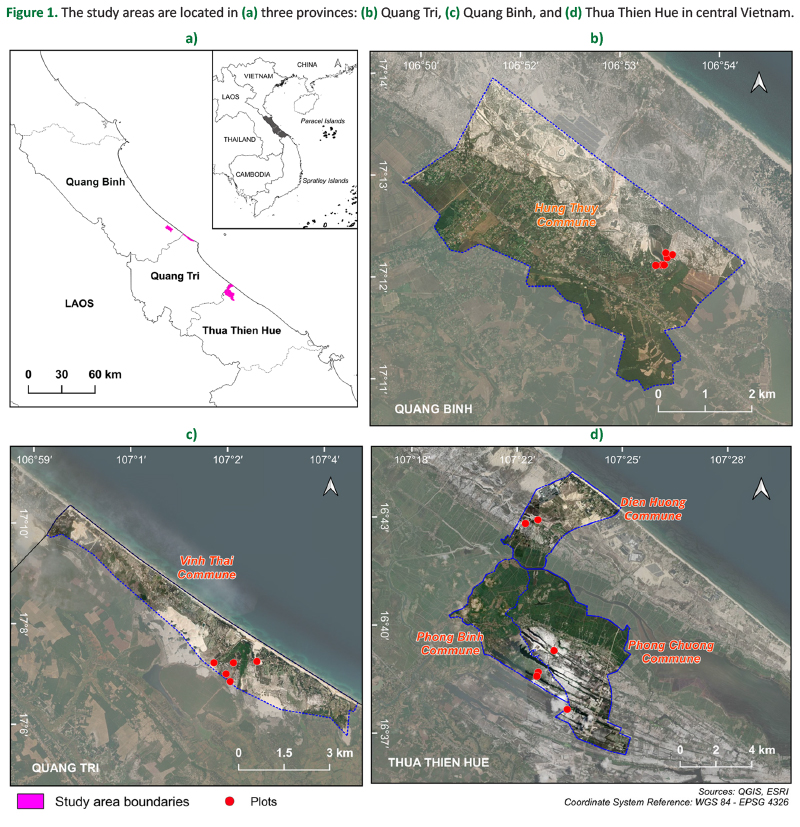
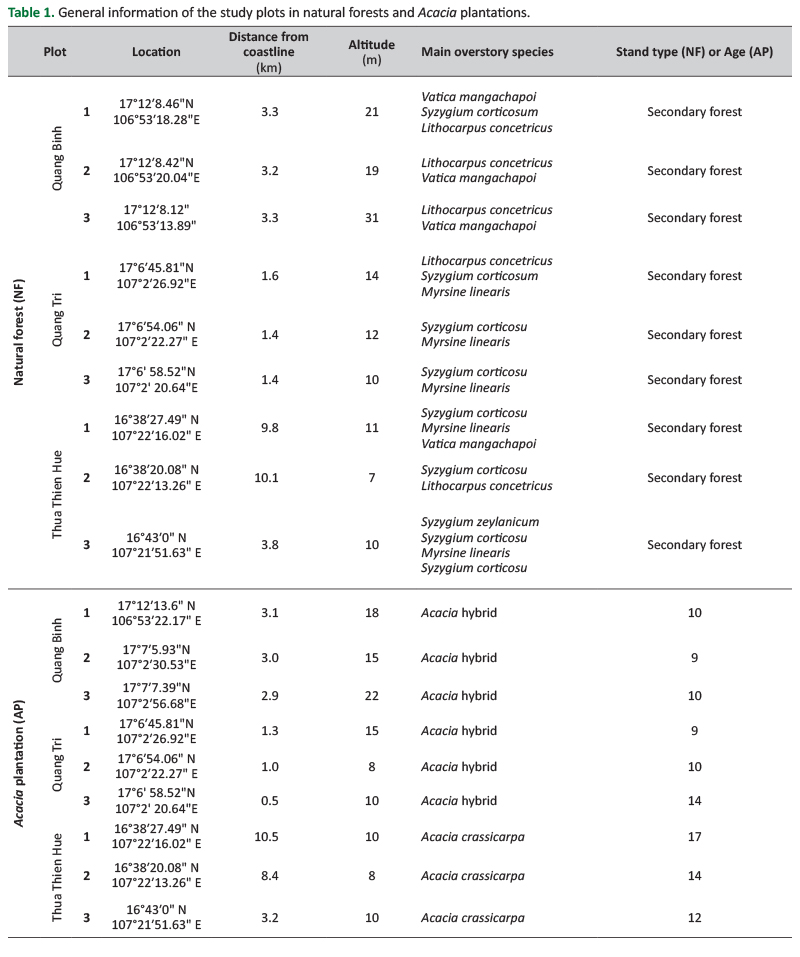 Table 1.General information of the study plots in natural forests and Acacia plantations.
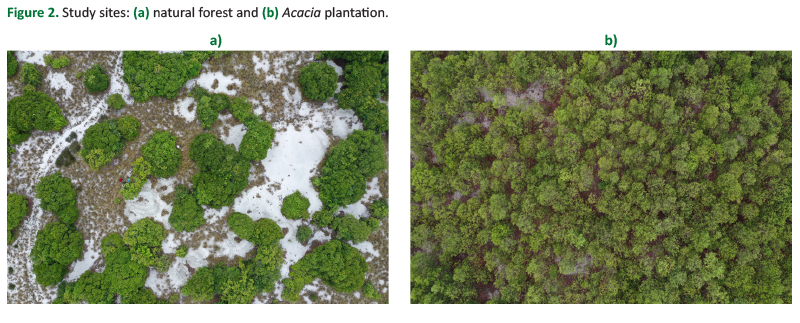 Figure 2. Study sites: (a) natural forest and (b) Acacia plantation.
The climate in this area is predominantly tropical monsoon, characterised by two distinct seasons: a rainy season from September to December and a dry season from January to September. The mean annual temperature is approximately 25°C, but the temperature at the ground surface in sandy areas can reach over 60°C (Hoa et al. 2010, Thao 2016). This extreme heat presents a critical factor influencing the germination, growth and development of vegetation (Hoang and Thao 2015, Thao 2016). Mean annual precipitation is approximately 3,000 mm, and about 40% of all annual precipitation falls between October and December (Bach and Hien 2004, Thao 2016, Canh et al. 2019). The topography of the region is relatively flat, with an altitude ranging from 7 to 31 meters above sea level (Table 1).
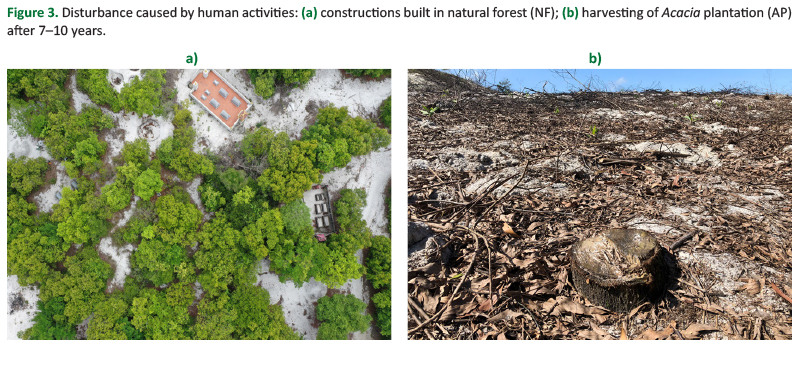
Disturbance history differed between forest types. Natural forests are relatively protected with limited recent disturbance, whereas plantation forests, established on degraded lands, are actively managed through thinning and understory clearing (Nambiar et al. 2015, Thao 2021) (Figure 3 a,b).
Understory Vegetation Census and Environmental Condition
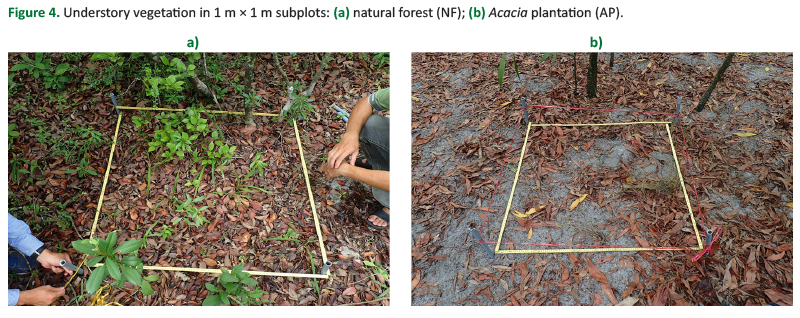
In three provinces of Central Vietnam, a total of 18 plots (15 × 15 m) were established, including nine plots in natural forests (NF) and nine in Acacia plantations (AP) (Table 1). In each plot, we established 3 subplots (1 × 1 m), resulting in a total of 54 subplots (27 in NF and 27 in AP) (Figure 4a,b). In NF, subplots were located directly beneath the canopy of dominant native tree species, selected to represent typical closed-canopy conditions within the plot (Table 1). Similarly, in AP, the subplots were established under the canopy of Acacia spp. Subplots were placed at least 1 meter away from large gaps, treefalls, or forest edges to ensure representation of typical understory conditions under canopy cover. All understory plant individuals (height < 130 cm) within each subplot were identified and counted during the field survey.
To address environmental factors that affect understory vegetation, we also determined some abiotic environmental factors. First, we measured the thickness of the organic soil layer and the soil volumetric water content of the mineral soil layer by using a portable sensor (ML3, Delta-T Devices, Cambridge, UK), at the centre and four corners of each subplot. Understory light availability was quantified by estimating canopy cover using hemispherical photographs taken at 1 m height at the centre of each subplot. We measured the pH (KCl) of surface mineral soil (0–10cm) using electrodes (sensION+ PH3 GLP, Hach, USA) in a 1:5 soil-water suspension. We also determined the distance from each plot to the nearest coastline using aerial imagery. Distances were calculated from the GPS coordinates of the plots to a digitised shoreline derived from high-resolution aerial photographs (Google Earth, 2023) within QGIS. The shortest Euclidean distance (in meters) was measured after reprojecting the data to the UTM coordinate system. These field surveys were conducted from July to August 2023.
Life Forms Classification
The classification of plant life forms was based on the Raunkiaer (1934): Phanerophytes (Ph) and Mega-Mesophanerophytes (MM), comprising medium- to large-sized woody species (>8 m in height); Microphanerophytes (Mi), consisting of small trees (2–8 m); Nanophanerophytes (Na), including shrubs and small trees (25 cm–8 m); Liana phanerophytes (Lp), Chamaephytes (Ch), Hemicryptophytes (Hm), and Cryptophytes (Cr).
Diversity Indices
For each subplot, we calculated four diversity indices: Species richness, Shannon, evenness, and Menhinick (Shannon 1948, Pielou 1975, Magurran 2004, Morris et al. 2014), using the formulas below:
Species richness (S) = Number of species
Shannon index (H’) = -∑pi ln pi
Evenness index = H’/ ln(S)
Mehinick index = S/√n
where pi is the proportion of individuals belonging to species i, and n is the total number of individuals in a subplot.
Statistical Analyses
All analyses were conducted using R version 4.3.3 (R Core Team, 2023), and statistical significance was set at P < 0.05.
Species richness in relation to sampling effort was assessed using sample-based rarefaction and species accumulation curves (packages vegan and rareNMtests) (Chao et al. 2014, Oksanen et al. 2022, Cayuela and Gotelli 2014). Asymptotic species richness (Total Estimated Species, TES) was estimated using both non-parametric methods (specpool) and nonlinear Michaelis–Menten models fitted to accumulation curves with random method and 100 permutations (specaccum) (Soberón and Llorente, 1993, Gotelli and Colwell, 2001, Colwell et al. 2012, Zou et al. 2023). The statistical significances of TES and B were tested using t values in the Wald test.
Differences in diversity indices and environmental variables between forest types were tested using mixed one-way ANOVA (aov), with subplots nested within plots as random effects, and differences in life-form composition were assessed using chi-squared tests (chisq.test) (package stats).
Differences in community composition among groups were analysed using PERMANOVA (adonis) based on Bray–Curtis and Jaccard dissimilarity matrices, after confirming the homogeneity of understory vegetation composition data between forest types by PERMDISP (betadisper) (package vegan). The NMDS analysis (metaMDS) was used for the visualisation (package vegan).
RESULTS
We recorded a total of 951 plant individuals across 54 subplots, comprising various life forms such as Liana phanerophytes (Lp), Microphanerophytes (Mi), Mega-Mesophanerophytes (MM), Cryptophytes (Cr), Nanophanerophytes (Na), Chamaephytes (Ch), and Hemicryptophytes (Hm). These individuals represent a total of 39 species, 35 genera, and 26 families (Table 2).
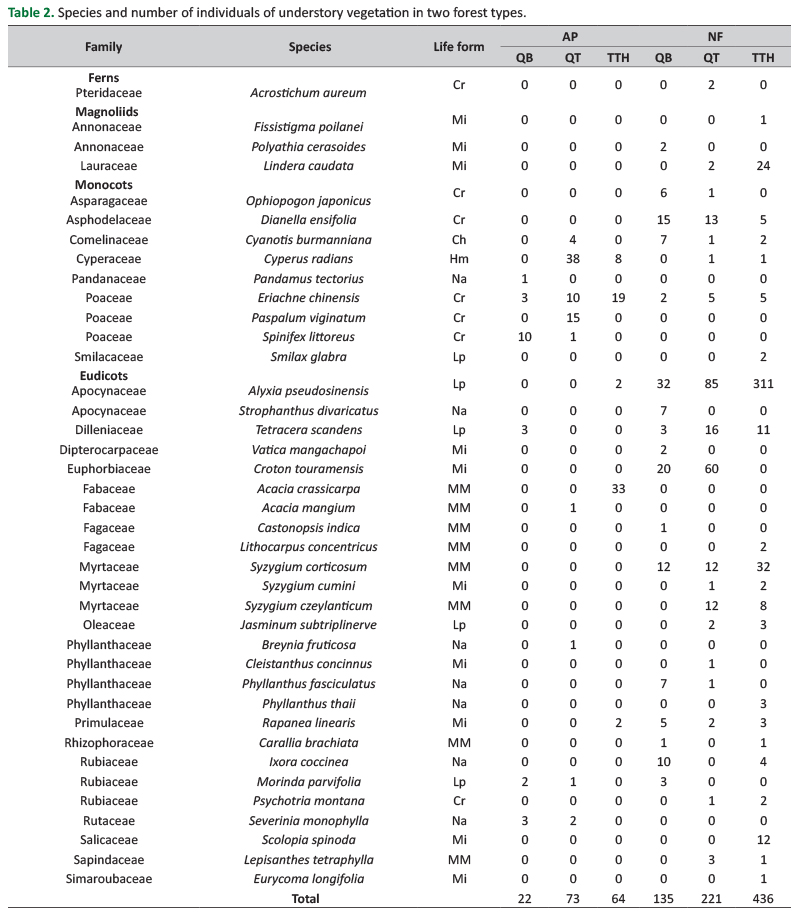 Table 2. Species and number of individuals of understory vegetation in two forest types.
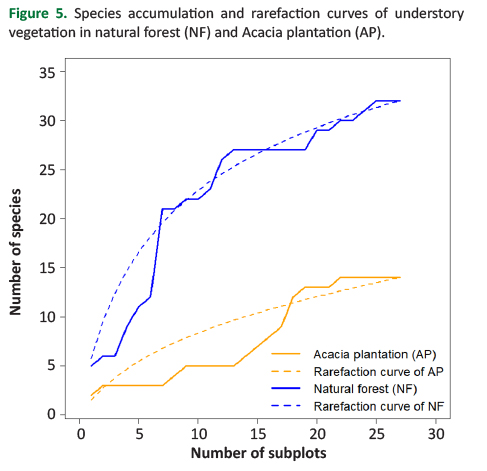
The species accumulation and rarefaction curves showed that the observed species richness increased steadily with the number of subplots, and reached 32 species in NF, but that in AP plateaued much earlier and stabilised at 14 species (Figure 5). The total estimated species (TES) values were 38.8 in NF and 21.5 in AP, and the shape parameters (B) were 6.5 in NF and 15.2 in AP, with relatively low standard errors (Table 3).

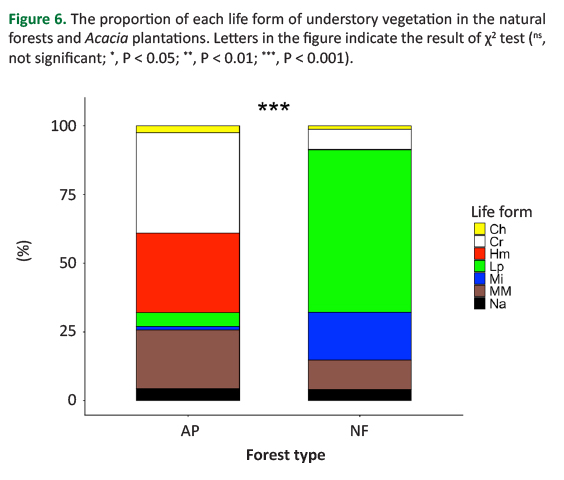
Species abundance and life form composition differed significantly between forest types. The natural forest (NF) contained 792 individuals (83.27% of the total), while only 159 individuals (16.73%) were found in the Acacia plantation (AP). In NF, the dominant life form was Lp, accounting for 49.21% (468 individuals), followed by Mi (17.42%), MM (10.73%), Cr (7.2%), Na (4.04%), Ch (1.26%), and Hm (0.25%). In contrast, AP showed a different composition, with Cr being the most abundant (36.48%), followed by Hm (28.93%), MM (21.38%), Lp (5.04%), Na (4.4%), Ch (2.52%) and Mi (1.26%) (Figure 6).
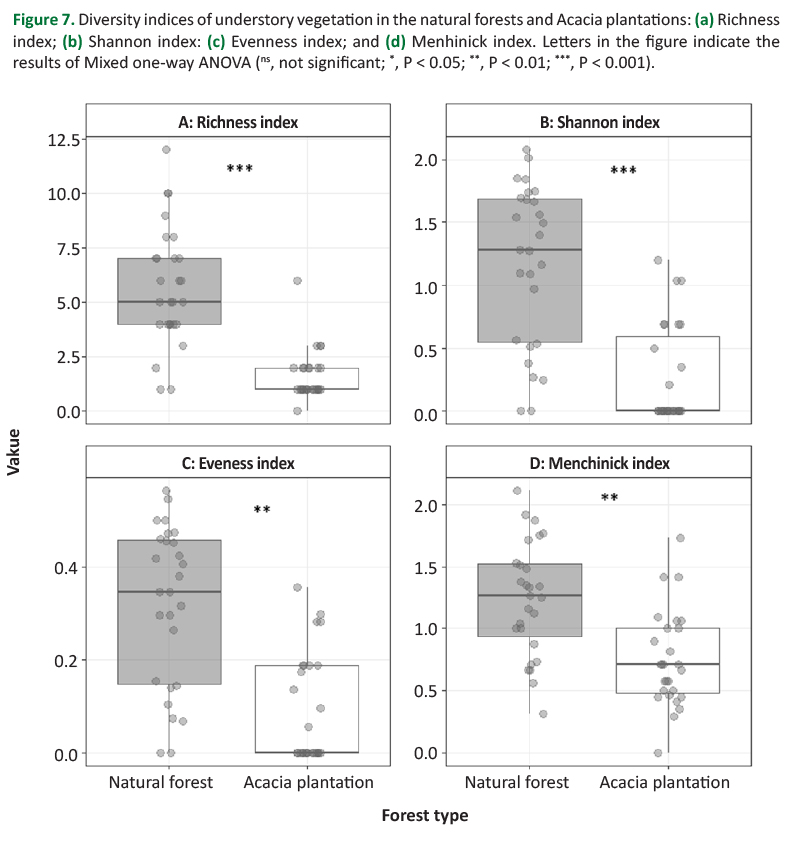
The mean values for species richness, Shannon, evenness, and Menhinick indices in NF were 5.70, 1.17, 0.32 and 1.24, respectively. In AP, they were 1.63, 0.26, 0.09 and 0.75, respectively. These indices were significantly lower in AP compared to NF (P < 0.05) (Figure 7a-d).
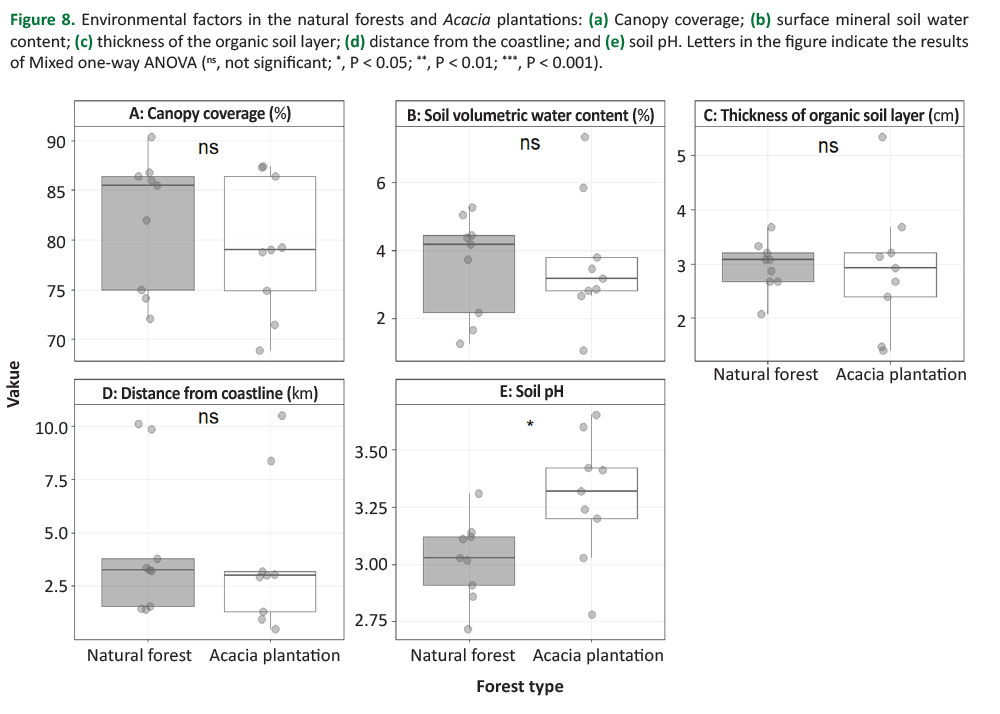
The mean values for canopy coverage (%), soil volumetric water content (%), thickness of organic soil layer (cm) and distance from the coastline (km) in NF were 86.5, 3.3, 3.2, and 3.9 respectively, and those in AP were 76.1, 4.1, 2.6, and 3.9 in AP respectively (Figure 8a-d). These environmental factors did not show a significant difference between NF and AP (P > 0.05). By contrast, pH (KCl) was significantly lower in NF (3.0) than in AP (3.3) (Figure 8e) (P < 0.05).
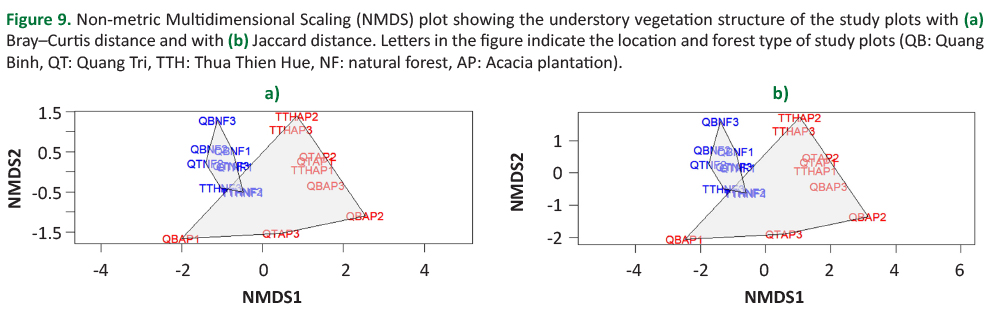
The Two-dimensional NMDS analysis was successful with a stress value of 0.08. The NMDS diagram showed a clear spatial separation of the understory vegetation composition between NF and AP (Figure 9). The results of PERMDISP indicated no significant differences in dispersion between groups for either Bray–Curtis (P = 0.07) or Jaccard distances (P = 0.09), and the PERMANOVA analysis revealed significant differences in understory species composition between forest types based on both Bray–Curtis (R² = 0.29, F = 6.46, P = 0.001) and Jaccard distances (R² = 0.21, F = 4.22, P = 0.001), however, no environmental factor was found to affect the differences in understory vegetation composition on the two-dimensional NMDS diagram.
DISCUSSION
Our study demonstrated that there were significant differences in understory plant community structure, diversity, and composition between natural forests (NF) and Acacia plantations (AP) in coastal sand dune ecosystems in North Central Vietnam (Figures 6–9, Tables 2, 4). Although the calculated rarefaction curves in both plots were relatively stabilised at the maximum number of subplots (Figure 5), understory species found in this study accounted for 82.5 % in NF and 66.7% in AP against the total estimated species (Table 3), suggesting that the species diversity at the regional scale may partly be underestimated in our census effort, especially for APs. However, the estimated species diversity from the rarefaction curves critically differed between the two forest types (Table 3), and this tendency can be well-reproduced by various diversity indices (Figure 7). The overall plant diversity in this study (Figure 7, Table 2) was consistent with previous studies in this region (Hoang and Thao 2015, Thao et al. 2015, Thao 2020, 2021, 2022, 2024).
The significantly higher values of species richness, Shannon diversity, evenness, and Menhinick index in NF highlight the superior ecological quality and complexity of the natural forest environment (Figure 7). The mean richness of 5.70 species per subplot in NF, compared to only 1.63 in AP, underscores a dramatic reduction in species coexistence under plantation conditions. Significant differences in the Shannon index (1.17 in NF vs 0.26 in AP) and evenness (0.32 vs 0.09) show that not only is the number of species greater in NF, but also their relative abundances are more balanced (Thao 2016, Thao 2022). In contrast, the low evenness in AP reflects a community dominated by a few species with limited diversity, a pattern often associated with simplified systems such as monocultures (Bremer and Farley 2010, Pawson et al. 2013).
The quantitative difference was accompanied by contrasting life form compositions (Figure 6). The dominance of Lp in NF (49.21%) reflects a structural characteristic commonly observed in tropical coastal sand dune forests where lianas represent an important life form contributing substantially to overall plant community composition (Black et al. 2010, Castanho et al. 2012, Chun & Choi 2012, White et al. 2024). The presence of a diverse spectrum of life forms, including Mi, MM, Cr, and Na, further highlights the structural complexity and ecological heterogeneity of NF. Studies of sand dune forests in other regions also reported that natural forests supported greater species diversity due to their structural complexity and ecological characteristics (Hesp 1991, Maun 2009, Acosta et al. 2009, Tordoni et al. 2021). In contrast, abundant life forms in AP (Cr and Hm) (Figure 6) were indicative of disturbance and early successional dynamics (Zou et al., 2023) and reflected the simplified structure and reduced diversity typical of afforested plantations (Brockerhoff et al. 2008, Kayes et al. 2010). Our findings support research that has shown that monoculture plantations often fail to replicate the natural heterogeneity and biodiversity of native forests (Provoost et al. 2011).
These differences in plant community structure between NF and AP were clearly reflected in the results of the NMDS analysis (Figure 9) and PERMANOVA, particularly in terms of species composition and abundance. These findings are consistent with previous studies on understory vegetation in coastal sand dune forests dominated by Acacia species, which reported negative impacts of Acacia on the diversity and abundance of understory species (Lorenzo et al. 2010, Rascher et al. 2011a, Fuentes et al. 2011, Le Maitre et al. 2011, González et al. 2012). Moreover, the PERMDISP test indicated that the differences observed were not due to heterogeneity in within-group dispersion (P > 0.05), thereby validating that the differences detected by PERMANOVA reflect genuine shifts in community centroids rather than differences in variance among plots (Ecklu-Mensah et al. 2023). This distinction is critical in ensuring that the observed patterns are driven by ecological differences between forest types, rather than by variability within them.
Although significant differences in vegetation composition and diversity were observed between two forest types, most environmental variables (thickness of the organic soil layer, surface mineral soil water content, canopy coverage, and distance from the coastline) did not differ significantly between forest types (Figure 8). Consequently, no environmental factor explains the variation in plant community structures (Figure 8). This suggests that abiotic conditions at the regional scale are relatively homogeneous across the study area, and that the observed differences in plant community structure are primarily driven by forest type and associated biotic processes rather than environmental gradients (Vandvik et al. 2020). On the other hand, the vegetative organs of Acacia trees (leaf, bark, and twigs) are known to release chemical compounds that inhibit the germination and growth of other plant species (Lorenzo et al. 2011, Ismail and Metali, 2014). Such allelopathic effects might be one of the possible factors that explain why vegetation under Acacia plantations tends to be less diverse compared to other forest types (Le Maitre et al. 2011, Lorenzo et al. 2011, González et al. 2012). Only soil pH (KCl) was significantly lower in NF (3.0) than in AP (3.3) (Figure 8). Isermann (2005) reported that the species richness of sand dune vegetation in northern Germany showed a peak at the site with intermediate soil pH when they compared species diversity between areas with soil pH ranging from 3.97 to 7.75. Therefore, the significantly higher soil pH in the Acacia plantation can potentially promote plant species diversity. The soil pH values in this study were relatively low and strongly acidic (pH < 4.0) in both forest types, as compared to the previous works in the sand dune forest of the North Central Coast of Vietnam (Hoa et al. 2004, Son et al. 2023). Even though the difference in pH values is extremely small, it may affect plant species diversity in the strongly acidic soil conditions. In addition, the lower species diversity observed in Acacia plantations may be attributed to differences in seed sources, along with intensive management and simplified canopy structure, which can limit understory species establishment (Lorenzo et al. 2011, Ismail and Metali 2014, Nambiar et al. 2015).
Currently, several research projects and investment initiatives are focused on rehabilitating and enhancing the coastal sand dune forests of North Central Vietnam using native species instead of Acacia (Wittmann et al. 2019, Hien et al. 2022, Pistorius et al. 2023). Globally, many coastal sand regions have successfully implemented restoration efforts using native tree species, highlighting the effectiveness of this approach in promoting biodiversity and ecosystem resilience (Page 2005, Griffiths et al. 2007, Williams 2007, Emily 2023). Besides, to enhance biodiversity and ecological functionality in plantations, management practices should prioritise mixed-species planting and promote natural regeneration (Anbarashan et al. 2017, Gao et al. 2018). Our results indicate that succession by native tree species does not seem to occur naturally in Acacia plantations. Hence, to restore and sustainably develop coastal sand forests in North Central Vietnam, it is essential to establish a scientifically based strategy for managing and protecting the remaining natural remnant forest areas. A long-term plan should focus on reforestation activities, prioritising the use of native tree species to conserve biodiversity and maintain ecosystem stability.
CONCLUSIONS
This study elucidated the fundamental differences in the understory vegetation structure between natural and plantation forests in the coastal sand dunes forest in Central Vietnam. These differences were clearly reflected in the species composition, species richness, and life forms, with distinct variations highlighted by biodiversity indices and NMDS modelling. The environmental factors did not directly influence the structural differences between the two forest types; allelopathic effects from the leaves of certain acacia species have been shown to negatively impact the germination capacity of understory species. The results of this study affirm the significant ecological value disparity between natural forests (NFs) and Acacia plantations (APs). NFs play a crucial role in maintaining and developing a stable and sustainable understory ecosystem, whereas APs tend to have negative effects on understory diversity and ecosystem stability. These findings provide a critical foundation for developing and implementing strategies for the restoration and enhancement of ecosystems in natural forest areas.
Author Contributions
MH and TKM conceived the research idea and the experimental design of the study; TQD, TKM, TTD, HTL, THN and MH contributed to the data collection and identified the species; TQD, TKM, TTD and MH performed the statistical analyses and wrote the paper; NHM and HTDH, provided critical revisions and approved the final version. All authors read, revised and agreed to the published version of the manuscript.
Funding
This research was funded by JSPS KAKENHI, grant number 22K05748.
Acknowledgments
We are grateful to Prof. Fujio Hyodo for his assistance with methodology and lab work, and to the Hue Union of Science and Technology Associations (HUSTA) teams for their support in fieldwork. We extend our sincere thanks to Prof. Nguyen Thi Hoai for conducting the pH analysis at the Faculty of Pharmacy, University of Medicine and Pharmacy, Hue University. Special thanks go to Dr. Megan Butler (Macalester College, USA) for her language review and editing.
Conflicts of Interest
The authors declare no conflict of interest.
REFERENCES
Acosta A, Carranza ML, Izzi CF, 2009. Are there habitats that contribute best to plant species diversity in coastal dunes?. Biodiversity Conservation 18(4): 1087–1098. https://doi.org/10.1007/s10531-008-9454-9.
Allen C, Savage M, Falk D, Suckling K, Swetnam T, Schulke T, Stacey P, Morgan P, Hoffman M, Klingel J, 2002. Ecological Restoration of Southwestern Ponderosa Pine Ecosystems: A Broad Perspective. Ecol Appl 12(5): 1418–1433. https://doi.org/10.2307/3099981.
Anbarashan M, Padmavathy A, Alexandar R, 2017. Short Communication: Survival and growth of mono and mixed species plantations on the Coromandel coast of India. Asian Journal of Forestry 1(2): Article 2. https://doi.org/10.13057/asianjfor/r010203.
Arens SM, Mulder JPM, Slings QL, Geelen LHWT, Damsma P, 2013. Dynamic dune management, integrating objectives of nature development and coastal safety: Examples from the Netherlands. Geomorphology 199: 205–213. https://doi.org/10.1016/j.geomorph.2012.10.034.
Avis AM,1989. A review of coastal dune stabilization in the Cape Province of South Africa. Landscape Urban Plan 18(1): 55–68. https://doi.org/10.1016/0169-2046(89)90055-8.
Bach NV, Hien DT, 2004. Ecological environment of the sandy areas in Quang Binh. Journal of Meteorology and Hydrology 518: 20–26.
Barbier S, Gosselin F, Balandier P, 2008. Influence of tree species on understory vegetation diversity and mechanisms involved—A critical review for temperate and boreal forests. Forest Ecol Manag 254(1): 1–15. https://doi.org/10.1016/j.foreco.2007.09.038.
Black SJ, Willing T, Dureau DM, 2010. A comprehensive survey of the flora, extent and condition of vine thickets on coastal sand dunes of Dampier Peninsula, West Kimberley 2000–2002. Broome Botanical Society, Broome, Australia, 139. Available online: https://library.dbca.wa.gov.au/FullTextFiles/070558.pdf.
Bonari G, Acosta ATR, Angiolini C, 2017. Mediterranean coastal pine forest stands: Understorey distinctiveness or not? Forest Ecol Manag 391: 19–28. https://doi.org/10.1016/j.foreco.2017.02.002.
Bremer LL, Farley KA, 2010. Does plantation forestry restore biodiversity or create green deserts? A synthesis of the effects of land-use transitions on plant species richness. Biodivers Conserv 19(14): 3893–3915. https://doi.org/10.1007/s10531-010-9936-4
Brockerhoff EG, Jactel H, Parrotta JA, Quine CP, Sayer J, 2008. Plantation forests and biodiversity: Oxymoron or opportunity? Biodivers Conserv 17(5): 925–951. https://doi.org/10.1007/s10531-008-9380-x.
Buffa G, Gaetan C, Piccoli S, Del VS, Fantinato E, 2021. Using fine-scale field data modelling for planning the management of invasions of Oenothera stucchii in coastal dune systems. Ecol Indic 125: 107564. https://doi.org/10.1016/j.ecolind.2021.107564.
Cam DX, 2011. Bio-diversity and the Ability to Make Use of Native Timber Trees in Developing Preventive forests along Central Coasts. Journal of Research and Development 85(2): 81–92. https://vjol.info.vn/index.php/ncpt-hue/article/view/3959.
Canh NV, Thanh HT, Dat LD. 2019. Characteristics of soil in the sand dunes area of Quang Tri Province and potential as an alternative construction material to river sand. CAREES 2019: 77–80.
Castanho CT, Oliveira AA, Prado PI. 2012. The importance of plant life form on spatial associations along a subtropical coastal dune gradient. J Veg Sci 23(5): 952–961. https://doi.org/10.1111/j.1654-1103.2012.01414.x.
Chao A, Gotelli NJ, Hsieh TC, Sander EL, Ma KH, Colwell RK, Ellison AM 2014. Rarefaction and extrapolation with Hill numbers: A framework for sampling and estimation in species diversity studies. Ecol Monogr 84(1): 45–67. https://doi.org/10.1890/13-0133.1.
Cayuela L, Gotelli NJ, 2014. rareNMtests: Ecological and biogeographical null model tests for comparing rarefaction curves. R Package Version 1: 2014.
Chun YM, Choi YD, 2012. Structure, Species Composition, and Soil Characteristics in a Chronosequence of Jack Pine (Pinus banksiana Lamb.) Stands on the Southern Shore of Lake Michigan. Am Midl Nat 168(2): 408–426. https://doi.org/10.1674/0003-0031-168.2.408.
Ciccarelli D, Bona C, Carta A, 2023. Coordination between leaf and root traits in Mediterranean coastal dune plants. Plant Biol 25(6): 973–980. https://doi.org/10.1111/plb.13562.
Colwell, RK, Chao A, Gotelli NJ, Lin SY, Mao CX, Chazdon RL, Longino JT, 2012. Models and Estimators Linking Individual-Based and Sample-Based Rarefaction, Extrapolation and Comparison of Assemblages. J Plant Ecol 5: 3–21. https://doi.org/10.1093/jpe/rtr044.
De LE, Baeten L, Verheyen K, Perring MP, Ma S, Landuyt D, 2021. Understorey removal effects on tree regeneration in temperate forests: A meta-analysis. J Appl Ecol 58(1): 9–20. https://doi.org/10.1111/1365-2664.13792.
Dolan AH, Walker I, 2006. Understanding vulnerability of coastal communities to climate change related risks. Journal of Coastal Research 39: 1316-1323. http://www.jstor.org/stable/25742967.
Ecklu-Mensah G, Choo KC, Maseng MG, Donato S, Bovet P, Viswanathan B, Bedu Addo K, Plange RJ, Oti BP, Forrester, TE, Williams M, Lambert EV, Rae, D, Sinyanya, N, Luke A, Layden BT, O’Keefe, S, Gilbert JA, Dugas LR, 2023. Gut microbiota and fecal short chain fatty acids differ with adiposity and country of origin: The METS-microbiome study. Nat Commun 14(1): 5160. https://doi.org/10.1038/s41467-023-40874-x.
Emily O, 2023. Nature-based dune restoration makes winners of us all. LTER Network. https://lternet.edu/stories/nature-based-dune-restoration-makes-winners-of-us-all/.
Fuentes AR, Pauchard A, Cavieres LA, García RA, 2011. Survival and growth of Acacia dealbata vs. Native trees across an invasion front in south-central Chile. Forest Ecol Manag 261(6): 1003–1009. https://doi.org/10.1016/j.foreco.2010.12.018.
Gao W, Huang Z, Ye G, Yue X, Chen Z, 2018. Effects of forest cover types and environmental factors on soil respiration dynamics in a coastal sand dune of subtropical China. J Forestry Res 29: 1645–1655. https://doi.org/10.1007/s11676-017-0565-6.
González MN, Costa T M, Espigares T, 2012. Invasion of alien Acacia dealbata on Spanish Quercus robur forests: Impact on soils and vegetation. Forest Ecol Manag 269: 214–221. https://doi.org/10.1016/j.foreco.2011.12.026.
Gotelli NJ, Colwell RK, 2001.Quantifying Biodiversity: Procedures and Pitfalls in the Measurement and Comparison of Species Richness. Ecol Lett 4: 379–91. https://doi.org/10.1046/j.1461-0248.2001.00230.x.
Griffiths ME, Lawes MJ, Tsvuura Z, 2007. Understorey gaps influence regeneration dynamics in subtropical coastal dune forest. Plant Ecol 189(2): 227–236. https://doi.org/10.1007/s11258-006-9179-3.
Hesp PA 1991. Ecological processes and plant adaptations on coastal dunes. J Arid Environ 21(2): 165–191. https://doi.org/10.1016/S0140-1963(18)30681-5.
Hien NTT, Tai DT, Hoang HDT, Pistorius T, Hung LT, Roth M, Duy T K, Tuan HNA, 2022. Ecosystem Based Adaptation for Coastal Sandy Forest Restoration: A Case Study in North Central Vietnam. Journal of Environmental Science for Sustainable Society 11: 5-8. https://doi.org/10.3107/jesss.11.PP02.
Hoa HTT, Phan A, Cong T, Minh H, Chen W, Bell R, 2010. Sandy soils in South Central Coastal Vietnam: Their origin, constraints and management. In: Gilkes RJ, Prakongkep N (eds) Proceedings of the 19th World Congress of Soil Science; Soil Solutions for a Changing World, Brisbane, Australia, 1-6 August 2010. IUSS, Rome, Italy, 251-254.
Hoa TTH, Huyen TT, Tam TT, Cong HV, Thuc DD, Chiang CN, Dufey JE, 2004. Nitrogen mineralization capacity of coastal sandy soils of the Thua Thien Hue Province, Central Vietnam. In: Proceedings of the Management of Tropical Sandy Soils for Sustainable Agriculture: A holistic approach for sustainable development of problem soils in the tropics, Khon Kaen, Thailand, 27 November -2 December 2005. FAO, Bangkok, Thailand. 250-255.
Hoang HDT, Thao TTH, 2015. Flora systems in the Coastal sandy areas in Central Vietnam. Hue University Journal of Science 111(12): 59–67.
Hu YH, Sheng DY, Xiang YZ, Yang ZJ, Xu DP, Zhang NN, Shi LL, 2013. The Environment, Not Space, Dominantly Structures the Landscape Patterns of the Richness and Composition of the Tropical Understory Vegetation. PLOS ONE 8(11): e81308. https://doi.org/10.1371/journal.pone.0081308.
Kayes LJ, Anderson PD, Puettmann, KJ, 2010. Vegetation succession among and within structural layers following wildfire in managed forests. J Veg Sci 21(2): 233–247. https://doi.org/10.1111/j.1654-1103.2009.01136.x.
Isermann M. 2005. Soil pH and species diversity in coastal dunes. Plant Ecol 178(1): 111–120. https://doi.org/10.1007/s11258-004-2558-8.
Ismail NAN, Metali F, 2014. Allelopathic effects of invasive Acacia mangium on germination and growth of local paddy varieties. Journal of Agronomy 13(4): 158–168. https://doi.org/10.3923/ja.2014.158.168.
Jaccard P, 1912. The Distribution of the Flora in the Alpine Zone.1. New Phytol 11(2): 37–50. https://doi.org/10.1111/j.1469-8137.1912.tb05611.x.
Kerns BK, Thies WG, Niwa CG, 2006. Season and severity of prescribed burn in ponderosa pine forests: Implications for understory native and exotic plants. Ecoscience 13(1): 44–55. https://doi.org/10.2980/1195-6860(2006)13[44:SASOPB]2.0.CO;2.
Le Maitre DC, Gaertner M, Marchante E, Ens EJ, Holmes PM, Pauchard A, O’Farrell PJ, Rogers AM, Blanchard R, Blignaut J, Richardson DM, 2011. Impacts of invasive Australian acacias: Implications for management and restoration. Divers Distrib 17(5): 1015–1029. https://doi.org/10.1111/j.1472-4642.2011.00816.x.
Legendre P, Gallagher ED, 2001. Ecologically meaningful transformations for ordination of species data. Oecologia 129(2): 271–280. https://doi.org/10.1007/s004420100716.
Lorenzo P, González L, Reigosa MJ, 2010. The genus Acacia as invader: The characteristic case of Acacia dealbata Link in Europe. Ann For Sci 67(1): 101–101. https://doi.org/10.1051/forest/2009082.
Lorenzo P, Palomera PA, Reigosa MJ, González L, 2011. Allelopathic interference of invasive Acacia dealbata Link on the physiological parameters of native understory species. Plant Ecol 212(3): 403–412. https://doi.org/10.1007/s11258-010-9831-9.
Lotze HK, Lenihan HS, Bourque BJ, Bradbury RH, Cooke RG, Kay MC, Kidwell SM, Kirby MX, Peterson C H, Jackson JBC, 2006. Depletion, Degradation, and Recovery Potential of Estuaries and Coastal Seas. Science 312(5781): 1806–1809. https://doi.org/10.1126/science.1128035.
Lu Y, Yuan J, Lu X, Su C, Zhang Y, Wang C, Cao X, Li Q, Su J, Ittekkot V, Garbutt RA, Bush S, Fletcher S, Wagey T, Kachur A, Sweijd N, 2018. Major threats of pollution and climate change to global coastal ecosystems and enhanced management for sustainability. Environ Pollut 239: 670–680. https://doi.org/10.1016/j.envpol.2018.04.016.
MacLean DA, Wein R W, 1977. Changes in understory vegetation with increasing stand age in New Brunswick forests: Species composition, cover, biomass, and nutrients. Can J Botany 55(22): 2818–2831. https://doi.org/10.1139/b77-320.
Magurran AE, 2004. Measuring biological diversity (2nd edition). Blackwell Publishing, Oxford, UK.
Maun MA, 2009. Plant communities. In: Maun MA (ed) The Biology of Coastal Sand Dunes. Oxford University Press, Oxford, UK, 164-180. https://doi.org/10.1093/oso/9780198570356.003.0016
Morris EK, Caruso T, Buscot F, Fischer M, Hancock C, Maier TS, Meiners T, Müller C, Obermaier E, Prati D, Socher SA, Sonnemann I, Wäschke N, Wubet T, Wurst S, Rillig MC, 2014. Choosing and using diversity indices: Insights for ecological applications from the German Biodiversity Exploratories. Ecol Evol 4(18): 3514–3524. https://doi.org/10.1002/ece3.1155.
Nambiar S, Harwood C, Kien N, 2015. Acacia plantations in Vietnam: Research and knowledge application to secure a sustainable future. Southern Forests: South Forests 77: https://doi.org/10.2989/20702620.2014.999301.
Oksanen J, Simpson G, Blanchet FG, Kindt R, Legendre P, Minchin P, hara R, Solymos P, Stevens H, Szöcs E, Wagner H, Barbour M, Bedward M, Bolker B, Borcard D, Carvalho G, Chirico M, De Cáceres M, Durand S, Weedon J, 2022. Vegan: Community Ecology Package. R Package Version 2.6-2.
O’Shea EM, Kirkpatrick JB, 2000. The impact of suburbanization on remnant coastal vegetation in Hobart, Tasmania. Appl Veg Sci 3(2): 243–252. https://doi.org/10.2307/1479003.
Page L. 30 LPP, 2005. Restoration of dune habitats along the Dutch coast. Available online: https://webgate.ec.europa.eu/life/publicWebsite/project/LIFE05-NAT-NL-000124/restoration-of-dune-habitats-along-the-dutch-coast.
Pasieczni N, McDonald D, 2016. Acacia crassicarpa (northern wattle). CABI Compendium: 2192. https://doi.org/10.1079/cabicompendium.2192.
Pawson SM, Brin A, Brockerhoff EG, Lamb D, Payn TW, Paquette A, Parrotta JA, 2013. Plantation forests, climate change and biodiversity. Biodivers Conserv 22(5): 1203–1227. https://doi.org/10.1007/s10531-013-0458-8.
Peperkorn R, Werner C, Beyschlag W, 2005. Phenotypic plasticity of an invasive acacia versus two native Mediterranean species. Funct Plant Biol 32(10): 933–944. https://doi.org/10.1071/FP04197.
Pielou EC, 1975. Ecological diversity. John Wiley & Sons, New York. Limnol Oceanogr 22(1): 174–174. https://doi.org/10.4319/lo.1977.22.1.0174b.
Pistorius T, Hoang HDT, Dinh TT, Hung LT, Roth M, Duy TK, 2023. Restoration of Degraded Coastal Forests in Vietnam’s North Central Coast. In: Leal Filho W, Nagy GJ, Ayal D (eds) Handbook of Nature-Based Solutions to Mitigation and Adaptation to Climate Change. 0. Springer International Publishing, Cham, Switzerland, 1-21. https://doi.org/10.1007/978-3-030-98067-2_20-1.
Provoost S, Jones MLM, Edmondson SE, 2011. Changes in landscape and vegetation of coastal dunes in northwest Europe: A review. J Coast Conserv 15(1): 207–226. https://doi.org/10.1007/s11852-009-0068-5.
Quinn GP, Keough MJ, 2002. Experimental Design and Data Analysis for Biologists. 1. Cambridge University Press, Cambridge, UK. https://doi.org/10.1017/CBO9780511806384.
Rascher KG, Große S A, Máguas C, Meira NJAA, Werner C, 2011. Acacial ongifolia invasion impacts vegetation structure and regeneration dynamics in open dunes and pine forests. Biol Invasions 13(5): 1099–1113. https://doi.org/10.1007/s10530-011-9949-2.
Raunkiaer C, 1934. The Life Forms of Plants and Statistical Plant Geography. Oxford University Press, London.
R Core Team. 2023. R: A Language and Environment for Statistical Computing. Version 4.3.3. Vienna: R Foundation for Statistical Computing.
Shannon CE, 1948. A Mathematical Theory of Communication. Bell Syst Tech J 27(3): 379–423. https://doi.org/10.1002/j.1538-7305.1948.tb01338.x
Soberón J, Llorente J 1993. The use of species accumulation functions for the prediction of species richness. Conserv Biol 7: 480–488. https://doi.org/10.1046/j.1523-1739.1993.07030480.x.
Son NH, Dan NN, Nhung NT, Hoang PH, Anh PH, Cham DD, 2023. Current Soil Degradation Assessment in the Thua Thien Hue Province, Vietnam, by Multi-Criteria Analysis and GIS Technology. Sustainability-Basel 15(19): 14276. https://doi.org/10.3390/su151914276.
Spanò C, Balestri M, Bottega S, Grilli I, Forino LMC, Ciccarelli D, 2013. Anthemis maritima L. in different coastal habitats: A tool to explore plant plasticity. Estuar Coast Shelf S 129: 105–111. https://doi.org/10.1016/j.ecss.2013.06.005.
Sterling EJ, Hurley MM, Duc LM, Powzyk J A, 2006. Vietnam: A Natural History. Yale University Press, London, UK. https://www.jstor.org/stable/j.ctt1njm24.
Tanaka N, Nandasena NAK, Jinadasa KBSN, Sasaki Y, Tanimoto K, Mowjood MIM, 2009. Developing effective vegetation bioshield for tsunami protection. Civ Eng Environ Syst 26(2): 163–180. https://doi.org/10.1080/10286600802435850.
Thao HX, 2020. Floral characteristics and diversity of trees and shrubs of angiosperm in natural vegetation on coastal sandy area of Gio Linh, Quang Tri, Viet Nam. Indian Journal of Plant Sciences 9: 48–56.
Thao HX, 2021. Species composition and distribution of angiosperm communities in sandy region in Quang Tri province. Doctoral Thesis, Hue University of Education, Faculty of Biology Vietnam, 165.
Thao HX, 2022. Diversity pattern of angiosperm tree and shrub on natural vegetation of coastal sandy region in Trieu Phong and Hai Lang districts, Quang Tri province, Viet Nam. Indian Journal of Plant Sciences 11: 16–25.
Thao HX, 2024. Diversity of trees and shrubs distributed on natural vegetation in inland sandy area of Hai Lang, Quang Tri, Vietnam. Indian Journal of Plant Sciences 1: 30–42.
Thao TTH, 2016. Research on the ecological characteristics of vegetation in sand dunes area in Phong Dien district, Thua Thien Hue province as a basis for proposing restoration and improvement measures. Doctoral Thesis, Ha Noi University of Education, Faculty of Biology, Vietnam, 121.
Thao TTH, Hoang HDT, Lan NK, 2015. Characteristics of plant communities at inner sandy areas in Thua Thien Hue province. Hue University Journal of Science 108(9): 269–278. https://jos.hueuni.edu.vn/index.php/TCKHDHH/article/view/2079.
Torca M, Campos JA, Herrera M, 2019. Species composition and plant traits of south Atlantic European coastal dunes and other comparative data. Data in Brief 22: 207–213. https://doi.org/10.1016/j.dib.2018.12.005.
Tordoni E, Bacaro G, Weigelt P, Cameletti M, Janssen JAM, Acosta ATR, Bagella S, Filigheddu R, Bergmeier E, Buckley HL, Ciccarelli D, Forey E, Hennekens SM, Lubke RA, Mahdavi P, Peet RK, Peinado M, Sciandrello S, Kreft H, 2021. Disentangling native and alien plant diversity in coastal sand dune ecosystems worldwide. J Veg Sci 32(1): e12861. https://doi.org/10.1111/jvs.12961.
Tordoni E, Napolitano R, Maccherini S, Da RD, Bacaro G, 2018. Ecological drivers of plant diversity patterns in remnants coastal sand dune ecosystems along the northern Adriatic coastline. Ecol Res 33(6): 1157–1168. https://doi.org/10.1007/s11284-018-1629-6.
Tordoni E, Petruzzellis F, Nardini A, Savi T, Bacaro G, 2019. Make it simpler: Alien species decrease functional diversity of coastal plant communities. J Veg Sci 30(3): 498–509. https://doi.org/10.1111/jvs.12734.
Vandvik V, Skarpaas O, Klanderud K, Telford RJ, Halbritter AH, Goldberg DE, 2020. Biotic rescaling reveals importance of species interactions for variation in biodiversity responses to climate change. P Natl Acad Sci-Biol 117(37): 22858–22865. https://doi.org/10.1073/pnas.2003377117.
White AE, Cohn N, Davis EH, Hein CJ, Zinnert JC, 2024. Coastal dune management affects above and belowground biotic characteristics. Sci Rep-UK 14(1): 22688. https://doi.org/10.1038/s41598-024-73312-z.
Williams MJ, 2007. Native Plants for Coastal Restoration: What, When, and How for Florida. USDA, NRCS, Brooksville Plant Materials Center, Brooksville, FL, USA. 51. Available online: http://www.fl.nrcs.usda.gov/programs/pmc/flplantmaterials.html.
Wittmann N, Hoang HDT, Pistorius T, Hung LT, Roth M 2019. Silvicultural Study Project: Coastal Restoration in Vietnam “Ecosystem-based Adaptation in the North Central Coast of Vietnam: Restoration and Co-management of Degraded Dunes and Mangroves”. UNIQUE forestry and land use GmbH, Freiburg, Germany. Available online: https://doi.org/10.13140/RG.2.2.14081.40800.
Zou Y, Zhao P, Axmacher JC, 2023. Estimating total species richness: Fitting rarefaction by asymptotic approximation. Ecosphere 14(1): e4363. https://doi.org/10.1002/ecs2.4363.
© 2026 by the author(s). License: Croatian Forest Research Institute. This article is an open access article distributed under the terms and conditions of the Creative Commons Attribution 4.0 International License (CC BY 4.0).