


SEEFOR 17(1): 26009
Article ID: 26009
DOI: https://doi.org/10.15177/seefor.26-009
ORIGINAL SCIENTIFIC PAPER
Impact of Protective Forest Belts (PFBs) on Wind Reduction, Microclimate, and Soil Properties
Aleksandar Baumgertel1, Sara Lukić1, Predrag Miljković1, Milica Caković Milosavljević1*, Stefan Miletić1, Nikola Živanović1, Snežana Belanović Simić1
Addresses: (1) University of Belgrade, Faculty of Forestry, Department of Ecological Engineering for Soil and Water Resources Protection, Kneza Višeslava 1, RS-11000, Belgrade, Serbia
* Correspondence: e-mail: milica.cakovic@sfb.bg.ac.rs
Citation: Baumgertel A, Lukić S, Miljković P, Caković Milosavljević M, Miletić S, Živanović N, Belanović Simić S, 2026. Impact of Protective Forest Belts (PFBs) on Wind Reduction, Microclimate, and Soil Properties.South-east Eur for 17(1): 26009. https://doi.org/10.15177/seefor.26-009.
Received: 4 Nov 2025; Revised: 28 Apr 2026; Accepted: 4 May 2026; Published online: 18 Jun 2026
Cited by: Google Scholar
Abstract
This study examines the impact of Protective Forest Belts (PFBs) on wind speed, air temperature, evapotranspiration, and soil properties in South Banat, Serbia. Six PFBs, composed of black walnut (Juglans nigra) and Siberian elm (Ulmus pumila), were analyzed for their effectiveness in improving environmental conditions in a highly susceptible to wind erosion Vojvodina region. The research involved measuring wind speed and air temperature windward of the PFBs (at 50 m) and leeward at distances of 30 m, 60 m, and 90 m within the protection zone. Composite soil samples were collected in the PFBs, as well as leeward at 30 m and 90 m within the protection zone. The results demonstrate a significant reduction in wind speed within the protected zone, with a 50% decrease recorded at 30 meters from the PFBs during the growing season. This wind reduction contributes to lower evapotranspiration, enhancing soil moisture retention. Additionally, air temperature increased immediately behind the PFBs before gradually declining with distance. The soil within the PFBs exhibited physical and chemical properties compared to adjacent agricultural land. Notably, PFBs-protected areas contained higher levels of organic matter, nitrogen, and phosphorus, along with improved moisture retention and reduced clay content. These benefits were most pronounced near the belts and diminished with increasing distance. A statistically significant correlation was also found between changes in wind speed and temperature on one hand, and the optical porosity of the belt on the other. The study underscores the multifunctional role of PFBs in enhancing microclimatic conditions and soil quality, positioning them as a crucial agroforestry strategy for sustainable agriculture. Given the significant threats of wind erosion in Vojvodina’s intensively farmed landscapes, the findings advocate for the broader implementation of PFBs.
Keywords: windbreaks; shelterbelts; agroforestry; ecosystem services; Republic of Serbia; Vojvodina
INTRODUCTION
Wind erosion is a significant type of soil degradation, primarily occurring in arid and semiarid areas (Zhibao et al. 2000, Zhang et al. 2019). However, it also presents a risk to certain regions of Europe (Borrelli et al. 2014). According to an estimate by the Joint Research Centre (Panagos et al. 2012), up to 42 million hectares of agricultural land in Europe are threatened by this process.
Protective Forest Belts (PFBs) are one of the most widely accepted and commonly used practices to protect soil from wind erosion, also known as windbreaks or shelterbelts. In addition to their primary function, wind speed reduction and consequently protection from wind erosion (Lukić and Dožić 2006, Rehacek et al. 2017), they also provide a wide range of other direct and indirect benefits for humans and the environment (Mize et al. 2008). PFBs influence the change in air temperature (Baker et al. 2021), which, together with the reduction of the incoming wind speed in the protected zone, contributes to evapotranspiration change and consequently to water resource management improvement (Thevs et al. 2017). PFBs designed with lower permeability structural design are an effective solution for controlling snowdrifts (AAFC 2009).
Furthermore, the change in evapotranspiration can improve soil moisture and create more favourable conditions for agricultural production. PFBs also maintain the inherent soil characteristics within their area, compared to the soil in adjacent areas used for agricultural production (Wu et al. 2018). In addition, PFBs contribute to a higher content of organic matter and better physical and chemical properties of the soil in the protected zone (Kong et al. 2022).
In the Republic of Serbia, the region of Vojvodina faces significant threats from wind erosion (Baumgertel et al. 2019). Furthermore, climate change is expected to intensify wind erosion in the future (Baumgertel et al. 2022) and also threaten agricultural production (Baumgertel et al. 2024). This is particularly significant because AP Vojvodina is one of the key economic regions of Serbia, as reflected in its contribution to the regional Gross Domestic Product (GDP). It accounts for 61.5% to 88.3% of the total production of major agricultural commodities in the country (Milošević et al. 2015). At the same time, this area is characterized by an extremely low density of forest with only 7.97% (Glavonjić et al. 2024).
One of the ways to introduce a woody component in such dominantly oriented agricultural systems is through the application of agroforestry practices. Agroforestry is the integration of trees and crops in interactive systems and is widely recognized as a sustainable land-use approach (Nair et al. 2021), where PFBs are one of the most frequently applied practices in the temperate zone and specific conditions (Suratman and Brandle 2024). The application of PFBs would increase the forest cover of this area, while at the same time contributing positively in many ways in terms of ecosystem services (Lukić et al. 2018, Belanović Simić et al. 2024). Although the theory highlights the multifunctional benefits of PFBs, there is limited research quantifying the specific functions they provide. The objectives of this research are: (1) to analyze the potential of PFBs to influence microclimate conditions in terms of wind speed reduction, change of air temperature and consequently change of evapotranspiration, (2) to analyze the relationship between the optical porosity of the belt and its function in reducing wind speed and altering air temperature, and (3) to evaluate the impact of PFBs on the physical and chemical properties of the soil within the belts compared to surrounding agricultural areas.
MATERIALS AND METHODS
Research Area
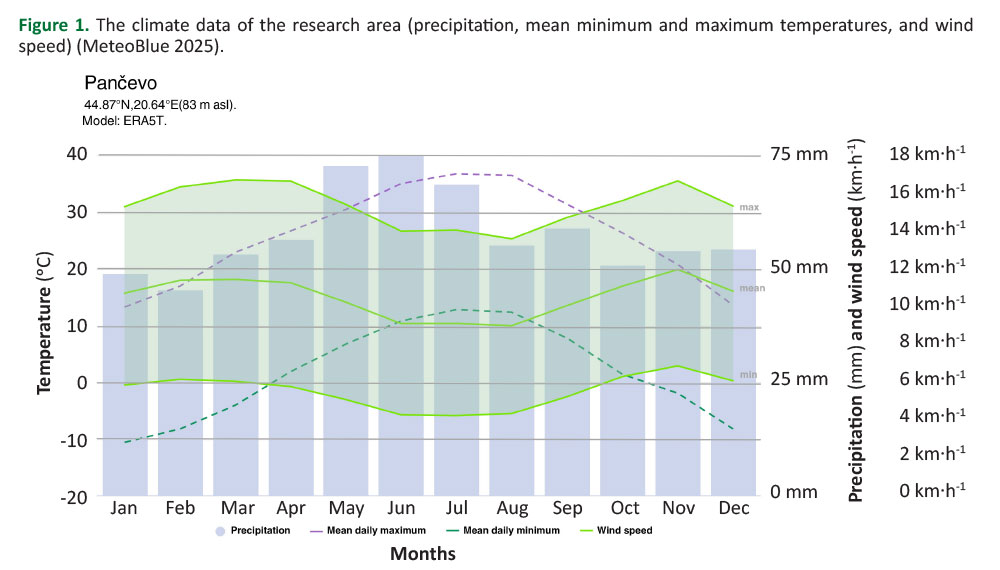
The research was conducted in the South Banat region in Vojvodina, near the city of Pančevo. According to MeteoBlue (2025) and based on weather models using historical data from 1985 and a continuous 30-year global historical dataset with hourly meteorological data, the research area is characterized by a continental climate with a maximum temperature of up to 30 °C (July–August) and a minimum temperature of around −1 °C during the winter period (Figure 1), with maximum rainfall recorded in May and June at approximately 75 mm.
The prevailing wind direction is SE with the highest speed, while most often the wind speed is in the range of 10 to 20 km·h-1 (Figure 2). This area is characterized by the occurrence of strong southeast wind (Košava), where the average monthly wind speed is around 6.3 m·s-1 (WEB).
Among the six representative PFBs (Figure 3) in this research, three (PFBs 1, 2, and 3) were established with black walnut (Juglans nigra L.), while the remaining three (PFBs 4, 5, and 6) were composed of Siberian elm (Ulmus pumila L.) (Table 1). The study area is characterized by high-quality soil, specifically carbonate Chernozem and Phaeozems.
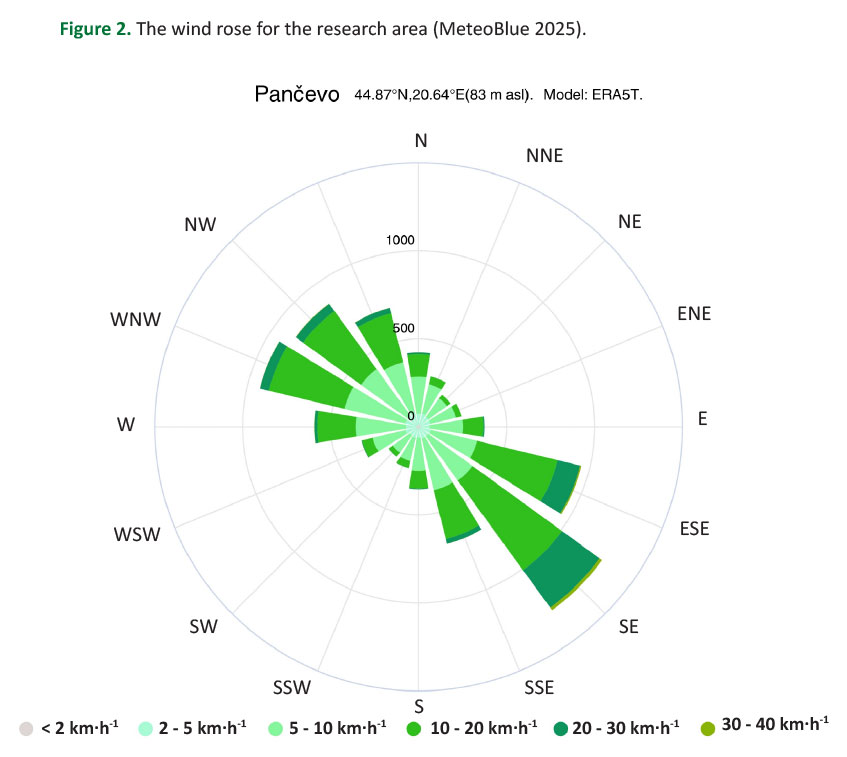 Figure 2. The wind rose for the research area (MeteoBlue 2025).
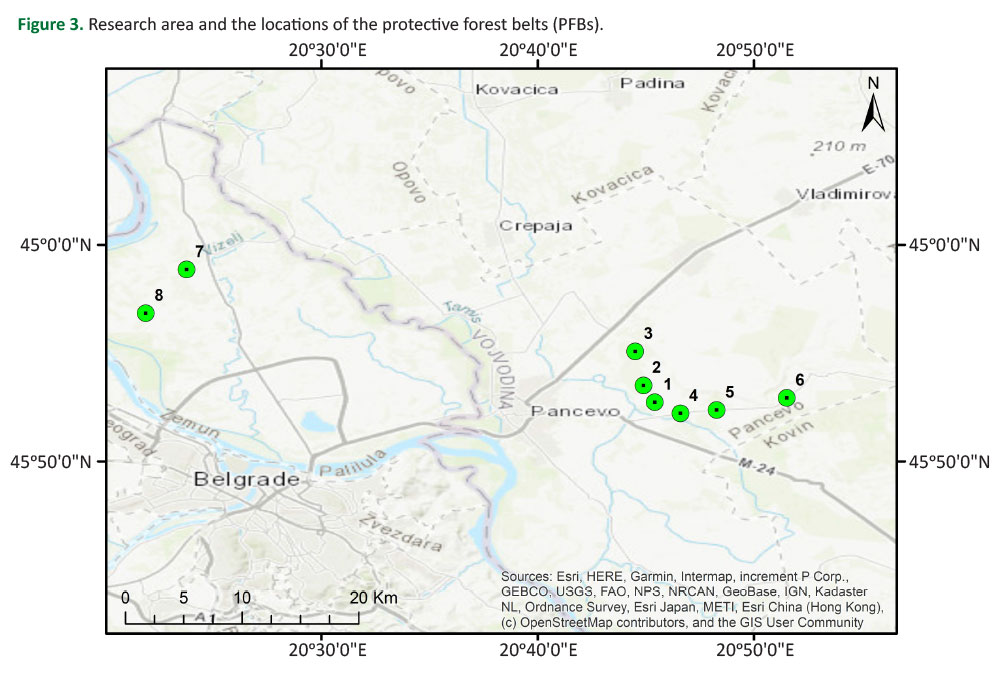 Figure 3. Research area and the locations of the protective forest belts (PFBs).
Method
Optical Porosity
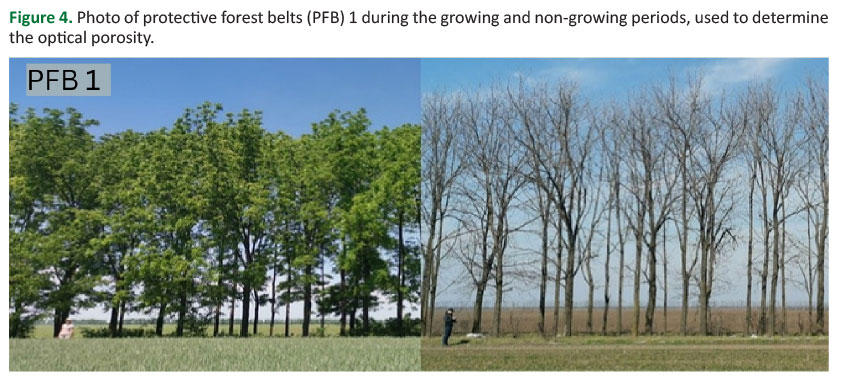
Optical porosity was determined using the high-contrast photo analysis method (Středa et al. 2008). This method includes perpendicular photographing to the PFB and determining the ratio of pixels representing vegetation silhouettes in relation to the number of pixels representing the "background" (sky, surfaces behind the belt, etc.). The images were captured using a triple Leica camera, ensuring high resolution and sufficient contrast for accurate image processing. Optical porosity was assessed using photos (Figure 4) taken across all six study PFBs during both the growing and non-growing seasons.
Wind Speed Reduction and Temperature Change
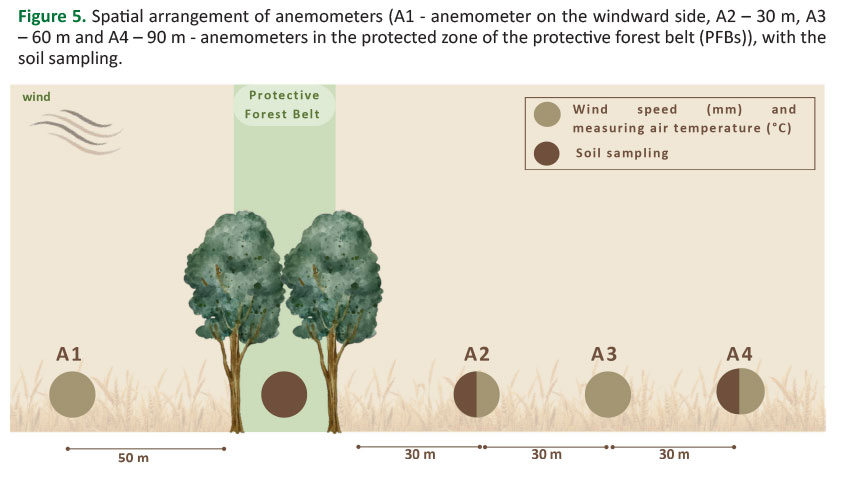
The wind speed reduction and air temperature change were measured using a mobile anemometer type YK 2005-AM with a logger (Lutron electronic). This type of anemometer records air temperature with an accuracy of ± 0.8 °C and wind speed of ± 0.2 m·s-1. Anemometers were placed at predetermined measurement points in relation to the PFBs (Figure 5) and were positioned at an elevation of 1.67 m to ensure consistency in measurements. The first anemometer (A1) is placed at 50 m in front of the PFBs on the windward side in relation to the dominant wind. Another three anemometers (A2, A3 and A4) were placed at measuring points at 30 m, 60 m and 90 m behind the PFBs in the protected zone (on the leeward side) (Figure 5). The measurement points could be defined based on the height of the belt (e.g., 1H at a distance equal to one belt height, 5H at a distance equal to five belt heights) (Rehacek et al. 2017). However, in this study, as in Středa et al. (2008) or Aili et al. (2024), fixed distances between measurement points were used (30, 60, 90 m). Since the average height of the belt in this study is about 10 m (Table 1), the measurement points at 30 m correspond to 3h, 60 m corresponds to 6h, and 90 m corresponds to a distance of 9h from the belt.
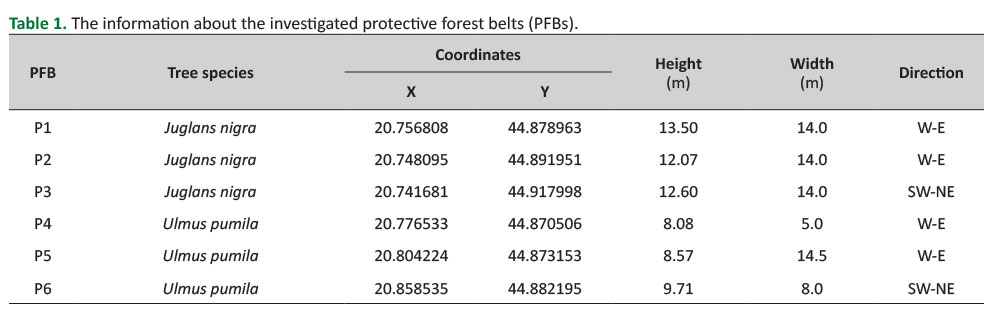 Table 1.The information about the investigated protective forest belts (PFBs).
Wind speed measurements per zone were performed in a time interval of 30 minutes, which means that approximately 900 incoming changes in wind speed and air temperature were detected on each anemometer during each series of measurements. Then, the wind speed was averaged on each anemometer, thus obtaining the average incoming wind speed at each measurement point. As part of the field work on measuring wind speed and air temperature, 18 measurements were performed on six studied zones in the period from June 2022 to August 2023.
The wind speed reduction and temperature change are expressed as a percentage of the wind speed/temperature in the protected zone (at measuring points A2 (30 m), A3 (60 m) and A4 (90 m)) in relation to the incoming wind speed/temperature outside the protected zone (at measuring point A1 – 50 m) in percentage expressed in decimal notation.
Soil Properties
Soil samples were taken based on a composite sample, which consisted of five subsamples, at depths of 0 to 10 cm in each of the PFBs collected at 30 m and 90 m from the PFBs (Figure 5).
The table (Table 2) shows the physical and chemical analyses performed in this research, as well as the used methodology and standards (according to ISO).
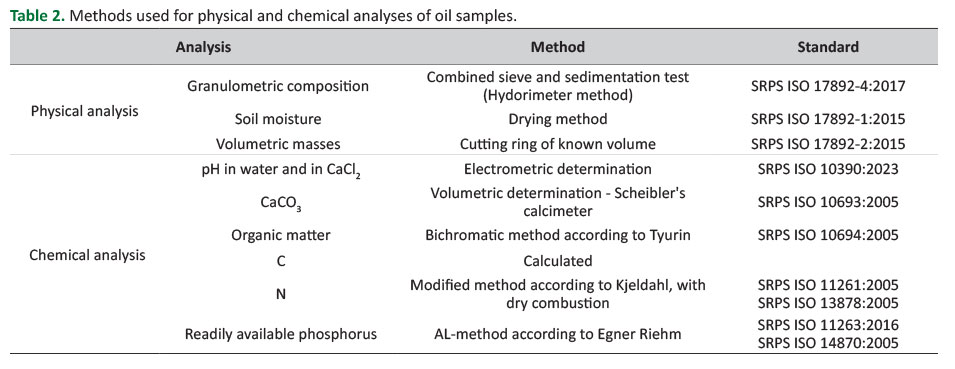 Table 2.Methods used for physical and chemical analyses of oil samples.
Reference Evapotranspiration
Reference evapotranspiration was calculated at the same measurement points where the wind speed reduction and air temperature change were measured. The calculation of evapotranspiration was performed using the FAO Penman Monteith equation (FAO 2025). This method, according to Sentelhas et al. (2010) is considered a universal and reference method for calculating evapotranspiration. According to the FAO Penman Monteith equation, the calculation of reference evapotranspiration is enabled based on the data on air temperature, relative air humidity, wind speed and insolation. Relative humidity data were obtained from the Republic Hydrometeorological Institute (RHI) yearbook for the Pančevo meteorological station, covering a 30-year period (1990-2020) for both growing and non-growing periods.
Statistical Analysis
The Two Independent Samples t-test was used to assess the statistical significance of the difference in the mean values of the potential of the PFBs regarding wind speed reduction and air temperature change between the growing and non-growing periods. To evaluate the statistical significance of the difference in the mean values of the physical and chemical properties of the soil at the measurement points (30 m and 90 m) within the PFBs’ protective zone, the Two-Samples Paired t-test was used. To assess the relationship and the strength of the association between the reduction in wind speed and air temperature, on the one hand, and optical porosity, on the other, a One-Factor Simple Regression analysis was applied. Statistical analysis was performed using Statgraphics v.16.1.11 software.
RESULTS
Wind Speed Reduction
Based on the measurement, the results show a reduction of the incoming wind speed under the influence of PFBs in both observed periods (growing and non-growing periods) (Table 3).
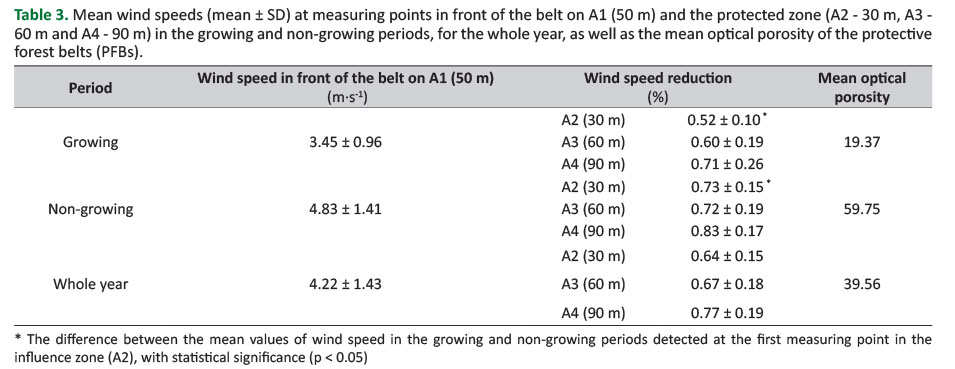
Wind speed reduction at 30 m leeward of PFBs is statistically significantly (p < 0.05) greater in the growing season compared to the non-growing season, accounting 48% and 22% of the initial wind speed at 50 m upwind of PFBs, respectively (Table 3).
Temperature Change
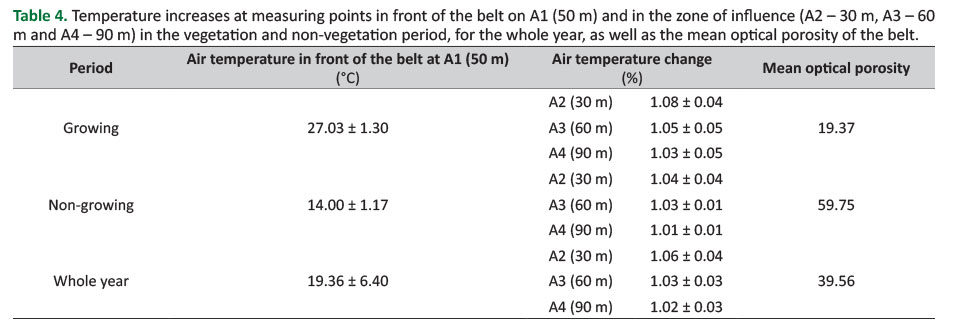
Based on the measurement of air temperature at the measurement point outside the protected zone of the PFBs (on the windward side of the belt - A1) and in the protected zone (A2 – 30 m, A3 – 60 m, and A4 – 90 m), the results show that in both observed periods (growing and non-growing period), there is an increase in air temperature immediately behind the PFB (A2 – 30 m). With distance from the PFB, at measuring points A3 – 60 m and A4 – 90 m, there is a decrease in temperature (Table 4).
The Relationship between the Optical Porosity of the Belt and the Reduction in Wind Speed and Changes in Air Temperature
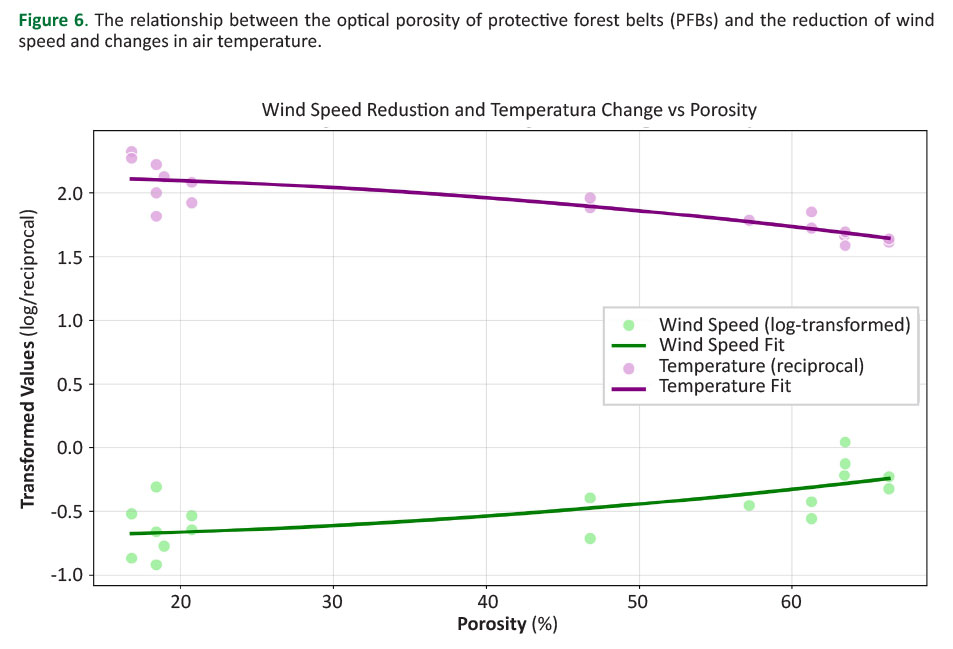
The results indicate a statistically significant
(p < 0.05) strong positive correlation (R = 0.71) between the reduction in wind speed at 30 m in the impact zone and the optical porosity of the belt (Figure 6). With increasing optical porosity, the belt reduces wind speed on the leeward side to a lesser extent. The results also indicate a statistically significant (p < 0.05) negative correlation (R = -0.51) between the increase in air temperature at 30 m in the impact zone and the optical porosity of the belt (Figure 6). The cooling effect of the belt increases with increasing optical porosity.
Evapotranspiration Change
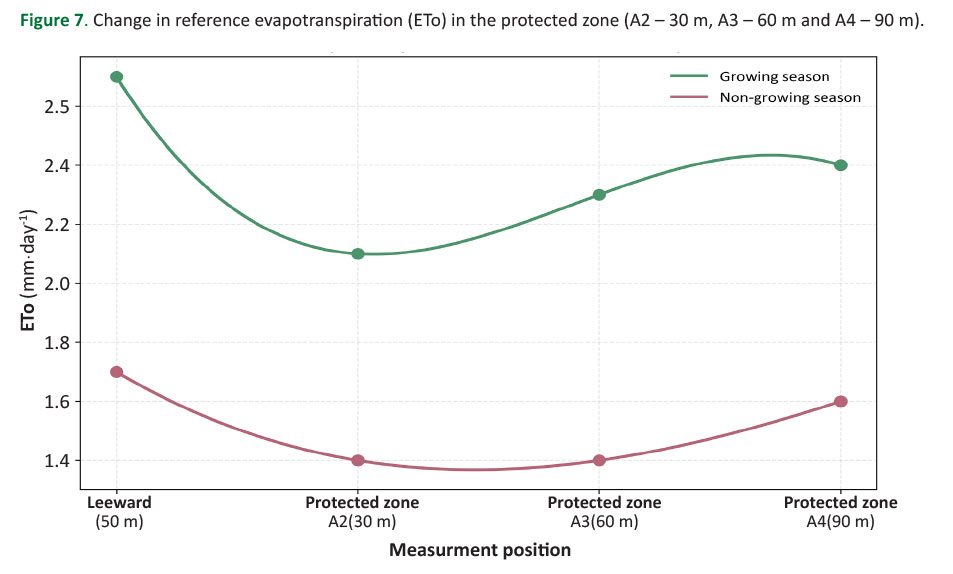
PFBs in the protected zone (at measuring points A2 – 30 m, A3 – 60 m and A4 – 90 m) significantly affect the reduction of wind speed and increase in air temperature. A change in these two indicators leads to a change in the reference evapotranspiration (ETo) in the protected zone. The graphs (Figure 7) show the change in reference evapotranspiration (ETo) in the protected zone of the studied PFBs in the growing and non-growing periods.
Soil Properties Change
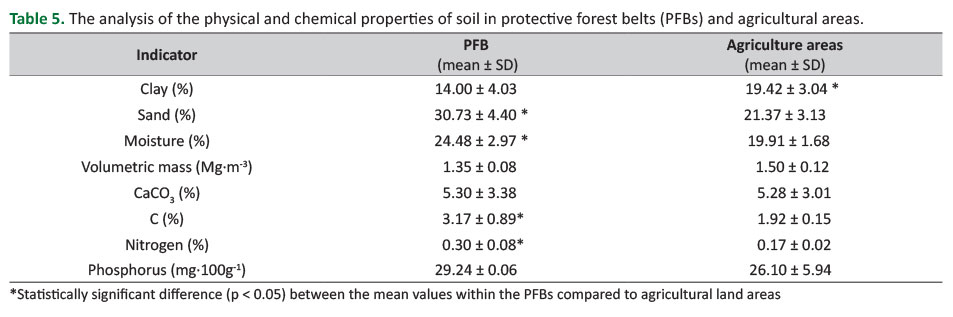
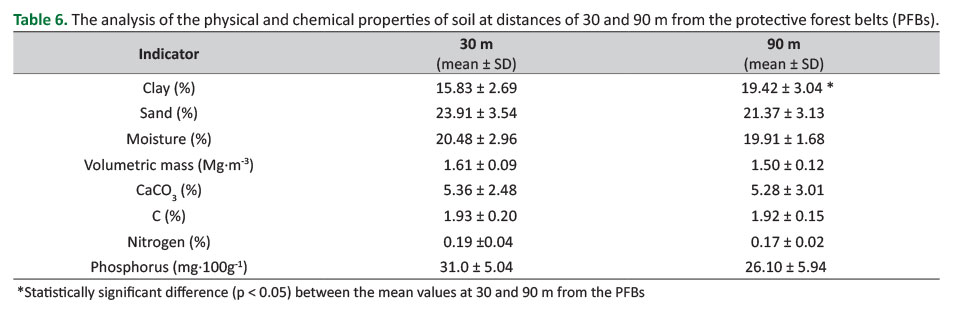
All soil samples in the PFBs compared to soil samples on the agricultural fields (90 m) are characterized by higher sand content, lower clay content and higher moisture content. Regarding chemical analysis, a higher content of humus, nitrogen and phosphorus is observed in the soils sampled in the PFBs compared to the soils sampled in agricultural fields (Table 5).
Based on the analysis of soil samples, a statistically significant difference in clay content was observed between 30 and 90 m from the PFBs (Table 6). Higher clay content was recorded at 90 m (19.41%) compared to 30 m, where it was 15.83%.
DISCUSSION
PFBs significantly contribute to reducing wind speed within their protected zone. However, the literature presents various statements regarding the distance within the protected zone where the belt's influence on wind speed reduction is observed. Based on the research conducted in the United States of America, Gloyne (1984) shows that at 20H (for a belt height of 10 m, this distance is 200 m) in the protected zone, there is a reduction in wind speed of about 40%. Heisler and Dewalle (1988) report that the wind speed reduction effect of shelterbelts extends to a distance of approximately 50H (for a belt height of 10 m, this distance is 500 m). However, most studies indicate a smaller distance from the belt where the reduction of the incoming wind speed occurs and that it is greatest in the zone from 3H to 5H (30 to 50 m). For example, Vacek et al. (2018), similarly to this study as well, show that at the first measuring point at 3H, which is approximately 30 m for a belt with an average height of 10 m, the incoming wind speed is reduced by about 60%, while at the farthest measuring point 12H, (approximately 120 m), the wind speed is reduced by only 20%. Similar results were obtained by Středa et al. (2008), Van Thuyet et al. (2014), and Rahacek et al. (2017). Based on the results of this research, at the third measurement point (A4), i.e. at 90m (approximately 9H) from the belt, in both observed periods, there is a reduction in wind speed of 23%.
When analyzing the influence of the PFBs in the growing and non-growing periods separately, there is a statistically significant difference in the reduction of wind speed at the first measurement point (A2), that is, at 30 m (about 3H) from the PFB. Similar results were reached by Rahcek et al. (2017), which show the greater potential of belts for reducing wind speed when the optical porosity is lower, because when the porosity of a belt is higher, there is physically greater airflow passing through the belt, i.e. when it is the growing period. Lukić and Dožić (2007) show that belts in the growing season have a greater potential for reducing wind speed and wind erosion control. Greater reduction of the incoming wind speed in the growing period is a consequence of lower belt porosity, i.e. optical porosity values closer to the optimum, in contrast to the non-growing period when the optical porosity is higher. To achieve optimal optical porosity even during the non-growing season, the use of coniferous species for PFBs could also be considered, as PFBs containing conifers exhibit higher optical porosity in comparison to broadleaf PFBs during the winter season.
Although numerous research has mentioned the influence of PFB on the change in wind speed reduction, a limited number of studies quantify the impact of the belts on the change in air temperature in the zone of influence. Nevertheless, Campi et al. (2009) reported an increase in temperature with distance from the PFBs. That research shows that air temperatures are higher near the PFB (in the protected zone) compared to the open field (outside the protected zone). Similar results were obtained in the research of Lampartová et al. (2015), where the mean maximum temperature in front of the PFB was
2°C lower compared to the area behind the PFB. Also, in the research of Skidmore et al. (1972), results indicate higher air temperatures recorded in the protected zone immediately behind the belt in relation to the temperature on the windward side. The aforementioned studies are in agreement with the results of this study, which indicate lower air temperatures in the open field where the influence of the PFBs is not recorded (in front of the PFB on the windward side) and increased air temperature in the protected zone, with a recorded increase in temperature with greater distance from the PFB. The impact of the PFB on temperature change can be explained by their effect on wind speed reduction (Baker et al. 2021), as in the protected zone, decreased wind speed and wind-driven cooling effect, which consequently leads to higher air temperatures.
The findings of this study align with the meta-analysis performed by Helfer et al. (2009) and showed that under the influence of PFBs, evapotranspiration is reduced by up to 35% on the windward side. In the same research, it is stated that the greatest reduction in evapotranspiration, up to 50%, is in the protected zone from 4H to 7H (around 40 to 70 m) on the leeward side of the PFBs. Similar results were obtained in the study by Campi et al. (2009), who show that there are three zones of PFBs' influence on the reduction of evapotranspiration. They show that the greatest decrease in reference evapotranspiration occurs in the protected zone at 5H from the PFBs. Further in the next zone, there is a gradual increase in evapotranspiration (from 5 to 17H), while in the third zone, evapotranspiration is the same as outside the zone of influence (beyond 17H). Also, in this research, as in Campi et al. (2009), it is observed that with distance from the PFB, there is an increase in evapotranspiration (Figure 7). Such positive effects of PFBs, including reduced wind speed and lower evapotranspiration, can significantly enhance agricultural production by increasing crop yields (Enescu et al. 2025).
Some authors state the positive influence of the forest on the physical characteristics of the soil in terms of better mechanical composition (optimal content of sand and clay particles), moisture, bulk density, as well as chemical composition (more organic matter, nutrients (NPK)) (Wu et al. 2018, Wu et al. 2023). Regarding the impact of PFBs on soil conditions, the findings are consistent with previously reported results, confirming their positive effects (Wu et al. 2018). The results of this study are compared with findings from previous research in which soil conditions within PFBs and in adjacent agricultural and pasture areas were analyzed, with a consensus indicating improved soil properties within the PFBs. This refers to non-capillary porosity (Yu et al. 2018) and higher soil moisture within shelterbelts, which can be directly attributed to the presence of trees and forest floor litter that enhance moisture retention and reduce water loss.
Additionally, a higher organic matter content has been observed within PFBs compared to surrounding agricultural areas, which is a result of the positive influence of forest vegetation, such as the decomposition of organic material. Such a positive impact on soil conditions can create more favourable conditions for agricultural production.
When observing the impact of PFBs in the protected zone and analysing the physical and chemical properties at the measured points from PFB, there is a lack of scientifically supported literature on this topic. However, some studies (Qiao et al. 2016, Kong et al. 2022) show that with distance from the PFBs, the influence of the PFBs in terms of increasing erodibility and nutrient content (organic matter and nitrogen) decreases. This research shows a statistically significant increase in clay content with increasing distance from the PFB, with higher values observed at 90 m (approximately 9H) compared to 30 m (approximately 3H). This pattern can be explained by the influence of intensive agricultural production and the application of mechanization, which results in soil compaction and higher content clay (Mileusnić et al. 2022) Additionally, higher concentrations of nutrients (carbon, nitrogen, phosphorus), although not statistically significant, observed near the PFB (at 30 m) may indicate a positive effect of the belt, which could further contribute to increased yields from agricultural land.
CONCLUSIONS
This study demonstrates the significant impact of Protective Forest Belts (PFBs) on wind speed reduction, improving microclimatic conditions, and enhancing soil properties in South Banat, Serbia. Results showed that wind speeds were reduced by up to 50% at 30 m from the PFB during the growing season, contributing to a decrease in evapotranspiration and higher soil moisture retention. These factors are crucial for mitigating soil erosion and sustaining agricultural productivity. PFBs also had a positive effect on some soil properties, with areas near the belts exhibiting higher organic matter, nitrogen, and phosphorus levels, alongside better moisture retention and lower clay content. These benefits were most pronounced closer to the PFBs and gradually diminished with increasing distance, underlining the need for careful planning in agroforestry systems. Additionally, air temperatures immediately behind the PFBs were slightly higher due to the reduction in wind speed, further contributing to favourable growing conditions. The study highlights the multifunctionality of PFBs, not only as a tool for controlling wind erosion but also for enhancing soil health, regulating temperature, and improving the overall microclimate. In regions like Vojvodina, where wind erosion poses a significant threat to agriculture, expanding the use of PFBs could be a sustainable solution.
This research supports the wider adoption of PFBs in agricultural landscapes, advocating for their role in increasing ecosystem services and improving the resilience of agro-ecosystems against climate change. Their wider application in agricultural production systems is important due to their positive impact on crop yields. The findings contribute valuable data to the growing body of research on agroforestry practices, emphasizing the importance of PFBs in sustainable land management.
Author Contributions
AB, SL conceived and designed the research, PM, MCM, SM, NŽ carried out the field measurements, NŽ, AB performed laboratory analysis, AB, PM, and MCM processed the data and performed the statistical analysis, SBS and SL secured the research funding and supervised the research and helped to draft the manuscript, AB, SL, PM and MCM wrote the manuscript.
Funding
This research was funded by Ministry of Science, Technological Development and Innovation of the Republic of Serbia, grant number: 451-03-34/2026-03/200169 and id: 451-03-33/2026-03/200169.
Conflicts of Interest
The authors declare no conflict of interest.
REFERENCES
Agriculture and Agri-Food Canada, Agroforestry Development Centre (AAFC), 2009. Shelterbelt development [Brochure]. Government of Canada.
Aili A, Hailiang X, Waheed A, Bakayisire F, Yingying X, 2024. Synergistic windbreak efficiency of desert vegetation and oasis shelter forests. PLOS ONE 19(10): e0312876. https://doi.org/10.1371/journal.pone.0312876.
Baker TP, Moroni MT, Hunt MA, Worledge D, Mendham DS, 2021. Temporal, environmental and spatial changes in the effect of windbreaks on pasture microclimate. Agr Forest Meteorol 297: 108265. https://doi.org/10.1016/j.agrformet.2020.108265.
Baumgertel A, Lukić S, Belanović Simić S, Kadović R, 2019. Identifying areas sensitive to wind erosion—A case study of the AP Vojvodina (Serbia). Appl Sci 9: 5106. https://doi.org/10.3390/app9235106.
Baumgertel A, Lukić S, Caković M, Lazić I, Tošić M, Momirović N, Pandey S, Bezdan A, Blagojević B, Đurđević V, 2024. Spatio-temporal analysis of vegetation response to climate change, case study: Republic of Serbia. Int J Environ Res 18: 21. https://doi.org/10.1007/s41742-024-00571-z.
Baumgertel A, Lukić S, Caković M, Miljković P, Tošić M, Lazić I, Djurdjevic V, Marković M, 2022. Spatiotemporal analysis of the future sensitivity to wind erosion using ensemble of the regional climate models: a case study. Int J Global Warm 27: 284-299. https://doi.org/10.1504/IJGW.2022.124203.
Belanović Simić S, Miljković P, Baumgertel A, Beloica J, Ninkov J, Vasin J, Lukić S, 2024. Značaj šumskih zaštitnih pojaseva za regeneraciju zemljišta. Glasnik Šumarskog Fakulteta. 130: 67-80. https://doi.org/10.2298/GSF2430067B.
Borrelli P, Ballabio C, Panagos P, Montanarella M, 2014. Wind erosion susceptibility of European soils, Geoderma 232-234: 471-478. https://doi.org/10.1016/j.geoderma.2014.06.008.
Campi P, Palumbo AD, Mastrilli M, 2009. Effects of tree windbreak on microclimate and wheat productivity. Eur J Agron 30(3): 220-227. https://doi.org/10.1016/j.eja.2008.10.004.
Enescu CM, Mihalache M, Ilie L, Dinca L, Constandache C, Murariu G, 2025. Agricultural benefits of shelterbelts and windbreaks: A bibliometric analysis. Agriculture 15(11): 1204. https://doi.org/10.3390/agriculture15111204.
FAO 2025. Chapter 2 - FAO Penman-Monteith equation. Available online: https://www.fao.org/4/x0490e/x0490e06.htm#fao%20penman%20monteith%20equation (26 July 2025).
Glavonjić B, Lazarević A, Kalem M, 2024. Inventory of wood energy consumption and GHG emissions from wood fuels in Vojvodina. In: Georgieva DV, Barčić AP (eds) Green deal initiatives, sustainable management, market demands, and new production perspectives in the forestry-based sector (WoodEMA 2024 proceedings), pp. 277-282.
Gloyne RW, 1984. Some effects of shelter belts and windbreaks. Committee on Hedgerow and Farm Timber of the Forestry Commission, and is published with their permission.
Heisler G, Dewalle F, 1988. Effects of windbreaks structure on wind flow. Agr Ecosyst Environ 22-23: 41-69. https://doi.org/10.1016/0167-8809(88)90007-2.
Helfer F, Zhang H, Lemckert JC, 2009. Evaporation reduction by windbreaks: Overview, modelling and efficiency. Urban Water Security Research Alliance Evaporation Series. Report no. 16.
Kong T, Liu B, Henderson M, Zhou W, Su Y, Wang S, Wang L, Wang G, 2022. Effects of shelterbelt transformation on soil aggregates characterization and erodibility in China black soil farmland. Agriculture 12(11): 1917. https://doi.org/10.3390/agriculture12111917.
Lampartová I, Schneider J, Vyskot I, Rajnoch M, Litschmann T, 2015. Impact of protective shelterbelt microclimate characteristics. Ekológia (Bratislava) 34(2): 101-110. https://doi.org/10.1515/eko-2015-0011.
Lukić S, Belanović Simić S, Pantić D, Beloica J, Baumgertel A, Miljković P, Borota D, Kadović R, 2018. Carbon storage in shelterbelts in the agroforestry systems of the Bačka Palanka area. AGROFOR – International Journal 3(2). https://doi.org/10.7251/AGRENG1802080L.
Lukić S, Dozič S, 2006. Efikasnost topole u vetrozaštiti na nekim lokalitetima u Vojvodini. Glasnik Šumarskog fakulteta 93: 121-128. https://doi.org/10.2298/GSF0693121L. [in Serbian].
Lukić S, Dožić S, 2007. Effect of mixed broadleaf-coniferous belt on the change of wind erosion intensity during the growing and nongrowing season. International conference Erosion and torrent control as a factor in sustainable river basin management – Conference proceedings. 25-28.9.2007. Belgrade.
MeteoBlue, 2025. Weather history and climate data. Available online: https://www.meteoblue.com/sr/vreme/historyclimate/climatemodelled/pan%c4%8devo_%d0%a1%d1%80%d0%b1%d0%b8%d1%98%d0%b0_787237 (5 April 2026).
Mileusnić Z, Saljnikov E, Radojević R, Petrović D, 2021. Soil compaction due to agricultural machinery impact. J Terramechanics 100: 51-60. https://doi.org/10.1016/j.jterra.2021.12.002.
Milošević D, Savić S, Stojanović V, Popov-Raljić J, 2015. Effects of precipitation and temperatures on crop yield variability in Vojvodina (Serbia). Ital J Agrometeorol 3: 35-44.
Mize C, Brandle JR, Bentrup G, 2008. Ecological development and function of shelterbelts in temperate North America. In: Jose S, Gordon AM (eds.) Toward agroforestry design. Advances in Agroforestry, vol 4. Springer, Dordrecht. https://doi.org/10.1007/978-1-4020-6572-9_3.
Nair PKR, Kumar BM, Nair VD, 2021. An introduction to agroforestry: Four decades of scientific developments. Springer, 666 p. https://doi.org/10.1007/978-3-030-75358-0
Panagos P, Barcelo S, Bouraoui F, Bosco C, Dewitte O, Gardi C, Erhard M, Hervas De Diego F, Hiederer R, Jeffery S, Lükewille A, Marmo L, Montanarella L, Olazabal C, Petersen J, Penizek V, Strassburger T, Toth G, Van Den Eeckhaut M, Van Liedekerke M, Verheijen F, Viestova E, Yigini Y, 2012. The state of soil in Europe: A contribution of the JRC to the European Environment Agency’s Environment State and Outlook Report— SOER 2010. In: Jones A (ed) EUR 25186 EN. Luxembourg (Luxembourg), Publications Office of the European Union, JRC68418.
Pošumimo Vojvodinu. Available online: https://posumimovojvodinu.rs/. (10 August 2025).
Qiao Y, Jun F, Wang Q, 2016. Effects of farmland shelterbelts on accumulation of soil nitrate in agro-ecosystems of an oasis in the Heihe River Basin, China. Agric Ecosyst Environ 235: 182-192. https://doi.org/10.1016/j.agee.2016.10.021.
Regional GDP of the Republic of Serbia - STATISTICAL OFFICE OF THE REPUBLIC OF SERBIA. Available online: http://publikacije.stat.gov.rs/G2010/pdfE/G20106008.pdf (October 7 2023).
Rehacek D, Khel T, Kucera J, Vopravil J, Petera M, 2017. Effect of windbreaks on wind speed reduction and soil protection against wind erosion. Soil Water Res 12: 128-135. https://doi.org/10.17221/45/2016-SWR.
Republic Hydrometeorological Service of Serbia (RHI). Available online: https://www.hidmet.gov.rs/index_eng.php. (26 September 2023).
Sentelhas PC, Gillespie TJ, Santos EA, 2010. Evaluation of FAO Penman–Monteith and alternative methods for estimating reference evapotranspiration with missing data in Southern Ontario, Canada. Agric Water Manag 97(5): 635-644. https://doi.org/10.1016/j.agwat.2009.12.001.
Skidmore E, Jacobs H, Hagen L, 1972. Microclimate Modification by Slat-fence Windbreaks1. Agron J 64: 160-162. https://doi.org/10.2134/agronj1972.00021962006400020010x.
Středa T, Malenová P, Pokladníková H, Rožnovský J, 2008. The efficiency of windbreaks on the basis of wind field and optical porosity measurement. Acta Universitatis Agriculturae et Silviculturae Mendelianae Brunensis 56: 281-288. https://doi.org/10.11118/actaun200856040281.
Suratman MN, Brandle JR, 2024. Chapter 7 - Tree shelterbelts for sustainable agroforestry. In: Jhariya MK, Meena RS, Banerjee A, Kumar S, Raj A (eds.) Agroforestry for carbon and ecosystem management. Academic Press, Elsevier, 97-107 pp. https://doi.org/10.1016/B978-0-323-95393-1.00011-7.
Thevs N, Strenge E, Aliev K, Eraaliev M, Lang P, Baibagysov A, Xu J, 2017. Tree shelterbelts as an element to improve water resource management in central Asia. Water 9: 842. https://doi.org/10.3390/w9110842.
Vacek Z, Řeháček D, Cukor J, Vacek S, Khel T, Sharma R, Kučera J, Král J, Papaj V, 2018. Windbreak efficiency in agricultural landscape of the central Europe: Multiple approaches to wind erosion control. Environ Manag 62: 942-954. https://doi.org/10.1007/s00267-018-1090-x.
Van Thuyet D, Van Do T, Sato T, Thai Hung T, 2014. Effects of species and shelterbelt structure on wind speed reduction in shelter. Agroforest Syst 88: 237-244. https://doi.org/10.1007/s10457-013-9671-4.
Wu T, Zhang P, Zhang L, Wang J, Yu M, Zhou X, Wang G, 2018. Relationships between shelter effects and optical porosity: A meta-analysis for tree windbreaks. Agric Forest Meteorol 259: 75-81. https://doi.org/10.1016/j.agrformet.2018.04.013.
Wu Y, Wang W, Wang Q, Zhong Z, Wang H, Yang Y, 2023. Farmland shelterbelt changes in soil properties: Soil depth-location dependency and general pattern in Songnen Plain, Northeastern China. Forests 14(3): 584. https://doi.org/10.3390/f14030584.
Yu B, Xie C, Cai S, Chen Y, Lv Y, Mo Z, Liu T, Yang Z, 2018. Effects of tree root density on soil total porosity and non-capillary porosity using a ground-penetrating tree radar init in Shanghai, China. Sustainability 10: 4640. https://doi.org/10.3390/su10124640.
Zhang H, Gao Y, Sun D, Liu L, Cui Y, Zhu W, 2019. Wind erosion changes in a semi-arid sandy area, inner Mongolia, China. Sustainability 11: 188. https://doi.org/10.3390/su11010188
Zhibao D, Xunming W, A Lianyou L, 2000. Wind Erosion in Arid and Semiarid China: An Overview. J Soil Water Conserv 55(4): 439-444. https://doi.org/10.1080/00224561.2000.12457339.
© 2026 by the author(s). License: Croatian Forest Research Institute. This article is an open access article distributed under the terms and conditions of the Creative Commons Attribution 4.0 International License (CC BY 4.0).